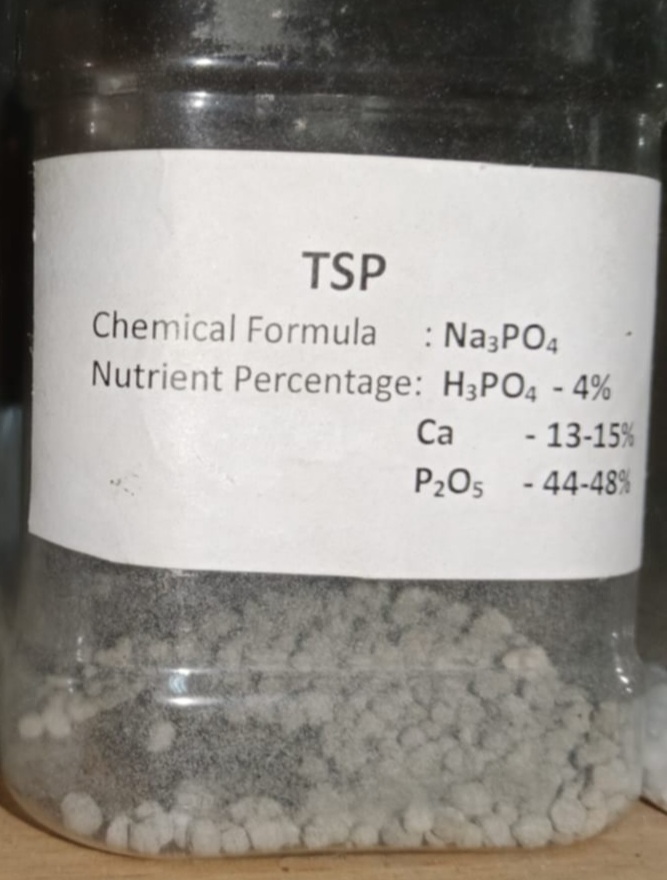
Here’s a detailed explanation of TSP (Triple Superphosphate) in agriculture: 1. What is TSP? Full name: Triple Superphosphate Chemical formula: Ca(H₂PO₄)₂ · H₂O Main nutrient: Phosphorus (P₂O₅) content ~46% (water-soluble form) Appearance: Grayish or brownish granular material Origin: Made by reacting rock phosphate with phosphoric acid 2. Importance in Agriculture Primary role: Supplies phosphorus (P) to plants Function of phosphorus in plants: Promotes root development Enhances flowering & fruiting Aids in energy transfer (ATP synthesis) Improves seed formation & maturation Particularly important in early crop growth stages for strong root systems 3. Advantages of TSP High phosphorus concentration (less bulk to apply) Water-soluble → phosphorus is immediately available to plants Suitable for a wide range of crops — cereals, pulses, oilseeds, vegetables, fruits Excellent for starter fertilizer application 4. Application Methods Basal application: Apply at planting or just before sowing to ensure phosphorus availability during early root development Place in bands or furrows near seeds (but avoid direct seed contact to prevent germination damage) Localized placement: Concentrates phosphorus where roots will grow, improving uptake efficiency Mixing with other fertilizers: Often combined with nitrogen or potassium fertilizers for balanced nutrition 5. Precautions Phosphorus is immobile in soil → must be placed close to roots for effective uptake Overuse can cause soil phosphorus buildup, leading to runoff and water pollution (eutrophication) Avoid surface application without incorporation in heavy rainfall areas, as it may cause losses 6. Environmental Notes Excess phosphorus runoff contributes to algal blooms in water bodies Use soil testing to determine exact phosphorus requirement before applying ✅ Summary: TSP is a concentrated, highly soluble phosphorus fertilizer that boosts root growth, flowering, and yield — especially when applied as a starter fertilizer near seeds or seedlings. Its correct placement and balanced use are crucial for both crop performance and environmental safety.
Welcome to BSMe2e, a vibrant platform brimming with exciting events, contests, and a thriving marketplace. We're committed to providing a fair and enjoyable experience for everyone – users, sellers, advertisers, and agents. To ensure a seamless journey, participation in any BSMe2e event or contest requires adherence to our comprehensive event policies.
BSMe2e Event Policies to Help You Participate with Purpose
- Users: Let your talents shine! BSMe2e offers a platform to showcase your skills, engage in skill-sharing, and seize opportunities. Remember, respect and integrity are the cornerstones of our community. For detailed guidelines, visit our dedicated policy page on Talent Competition Conditions.
- Sellers: Your storefronts are the lifeblood of our marketplace. To maintain a trustworthy environment, adhering to our Seller Service Policies is crucial. These policies cover everything from product listings to customer interactions, fostering a standardized and professional experience across all eStores. Explore the Terms and Conditions for a clear understanding.
- Advertisers: You're the storytellers, bringing brands and services to life with your creative ads. Your contributions fuel our ecosystem, and following our Advertisement Policies is essential. These guidelines ensure a respectful and lawful marketing practice, upholding the integrity of our advertising space. Dive deeper into the Advertisers Policies to craft impactful campaigns.
- Agents: As BSMe2e ambassadors, you play a pivotal role in fostering growth and connections. Following our Agent Program Policies equips you with the knowledge to excel and champion the values of our community.
Each event and contest has its own set of terms and conditions, detailed within specific policy pages. We highly recommend thoroughly reviewing these terms before engaging in any activity on our platform.
A Commitment to All
At BSMe2e, we wish to foster a community that celebrates innovation and mutual respect. Our policies support this commitment, ensuring every interaction is rooted in excellence.
Join the BSMe2e Journey
Unleash your potential, connect with a global audience, and be part of a futuristic marketplace that celebrates talent and entrepreneurship. At BSMe2e, your journey to success begins!


 ENG
ENG

Knowledge like this empowers farmers to make better crop decisions. Thanks for sharing practical agriculture wisdom!