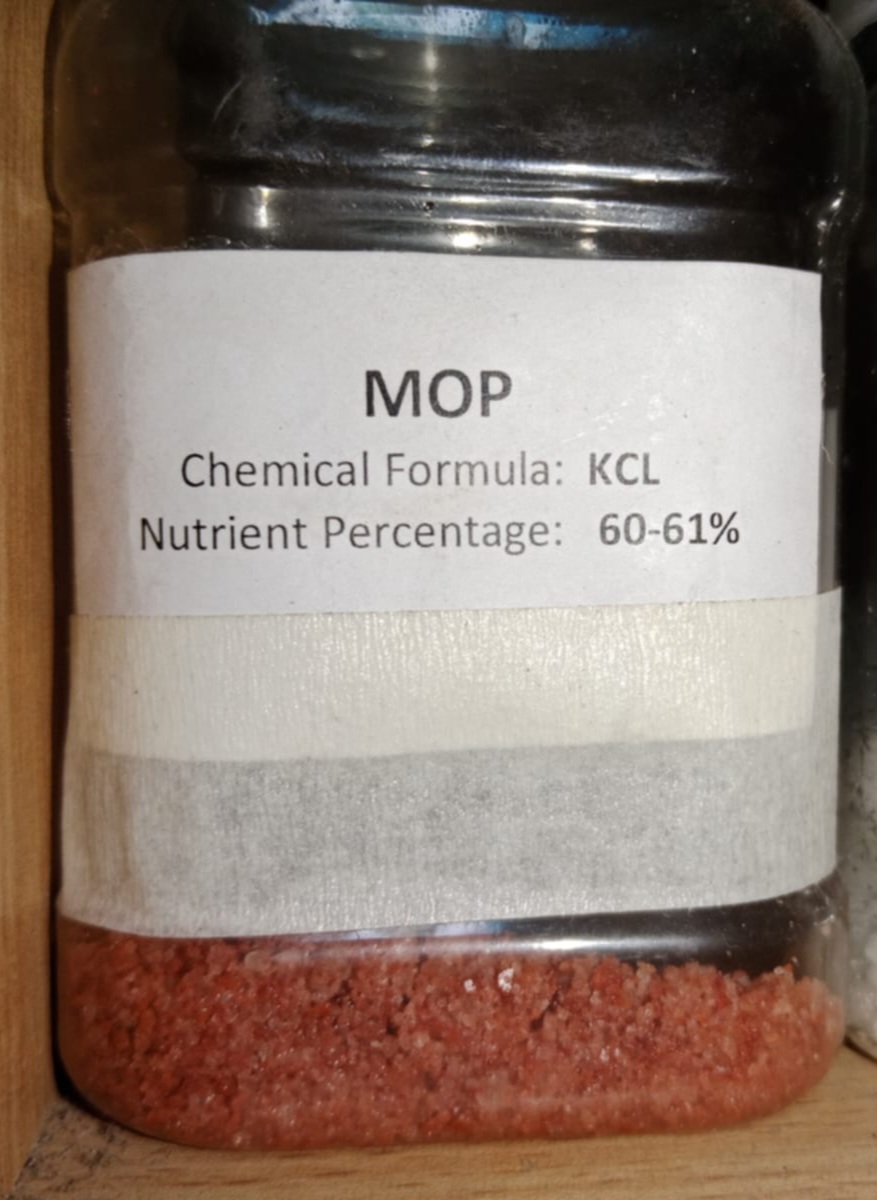
Here’s the detailed explanation of MOP (Muriate of Potash) in agriculture: 1. What is MOP? Full name: Muriate of Potash Chemical name: Potassium Chloride (KCl) Nutrient content: ~60% Potassium Oxide (K₂O) (water-soluble) Appearance: Pinkish/red or white crystalline granules (color depends on source impurities) Source: Extracted from natural potash deposits and refined 2. Importance in Agriculture Primary role: Supplies potassium (K) to plants Functions of Potassium: Regulates water movement in plants (osmotic balance) Enhances enzyme activation and photosynthesis Improves disease resistance and stress tolerance Enhances fruit size, color, and taste Strengthens stems and reduces lodging in cereals 3. Advantages of MOP High potassium concentration → reduces transport and handling cost Fully water-soluble, quickly available to plants Improves crop quality, shelf life, and yield Cost-effective compared to other potash fertilizers 4. Application Methods Basal application: Apply before or at planting, especially for potassium-demanding crops (potato, sugarcane, banana, vegetables) Top dressing: For crops with long growing seasons, split application ensures continuous potassium supply Fertigation: MOP can be dissolved in irrigation water, but chloride-sensitive crops may require SOP (Sulphate of Potash) instead 5. Precautions Contains chloride (Cl⁻), which can harm chloride-sensitive crops such as tobacco, grapes, citrus, and some vegetables — in such cases use SOP instead Overuse may cause soil salinity in poorly drained soils Best applied based on soil test recommendations to prevent nutrient imbalance 6. Environmental Notes Excessive potassium application can interfere with magnesium and calcium uptake in plants Potash runoff is generally less harmful than nitrogen or phosphorus losses, but balanced application is still important ✅ Summary: MOP is a high-potassium fertilizer essential for improving crop quality, disease resistance, and stress tolerance. It is cost-effective, widely used, and best applied based on crop needs and soil conditions — but should be avoided for chloride-sensitive crops.
Welcome to BSMe2e, a vibrant platform brimming with exciting events, contests, and a thriving marketplace. We're committed to providing a fair and enjoyable experience for everyone – users, sellers, advertisers, and agents. To ensure a seamless journey, participation in any BSMe2e event or contest requires adherence to our comprehensive event policies.
BSMe2e Event Policies to Help You Participate with Purpose
- Users: Let your talents shine! BSMe2e offers a platform to showcase your skills, engage in skill-sharing, and seize opportunities. Remember, respect and integrity are the cornerstones of our community. For detailed guidelines, visit our dedicated policy page on Talent Competition Conditions.
- Sellers: Your storefronts are the lifeblood of our marketplace. To maintain a trustworthy environment, adhering to our Seller Service Policies is crucial. These policies cover everything from product listings to customer interactions, fostering a standardized and professional experience across all eStores. Explore the Terms and Conditions for a clear understanding.
- Advertisers: You're the storytellers, bringing brands and services to life with your creative ads. Your contributions fuel our ecosystem, and following our Advertisement Policies is essential. These guidelines ensure a respectful and lawful marketing practice, upholding the integrity of our advertising space. Dive deeper into the Advertisers Policies to craft impactful campaigns.
- Agents: As BSMe2e ambassadors, you play a pivotal role in fostering growth and connections. Following our Agent Program Policies equips you with the knowledge to excel and champion the values of our community.
Each event and contest has its own set of terms and conditions, detailed within specific policy pages. We highly recommend thoroughly reviewing these terms before engaging in any activity on our platform.
A Commitment to All
At BSMe2e, we wish to foster a community that celebrates innovation and mutual respect. Our policies support this commitment, ensuring every interaction is rooted in excellence.
Join the BSMe2e Journey
Unleash your potential, connect with a global audience, and be part of a futuristic marketplace that celebrates talent and entrepreneurship. At BSMe2e, your journey to success begins!


 ENG
ENG
Essential plant nutrition in a nutshell — thanks for making complex agri-chemicals easy to understand!