The Dream of the Ultimate Ride
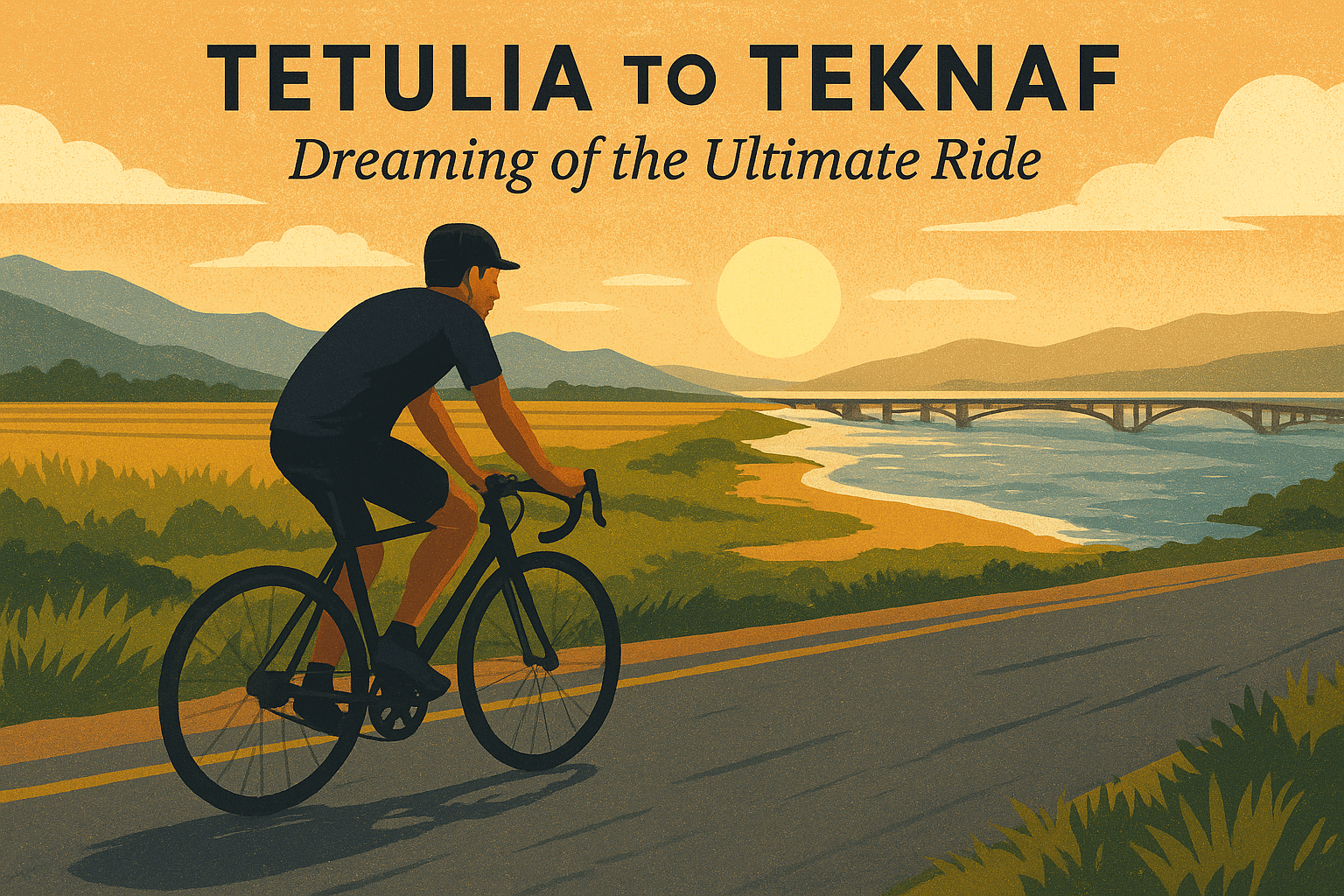
Every cyclist has a horizon they dream of chasing. For me, it wasn’t just a horizon of distance, but of meaning: to take a Fixed Gear Bicycle, with a 48×17t gear ratio, and ride the entire length of Bangladesh from Tetulia in the far north to Teknaf in the deep south.
A simple line across the map, yet a line that would cut through every layer of my body and mind.
Why a fixed gear? Because it does not forgive. No coasting, no resting, no escape from effort. Every rotation of the pedals is earned. Every descent is still work. Every climb is a test of faith. Riding a fixie is the purest conversation you can have with the road.
And so the dream was born. Not of medals, not of records, not of crowds. Just of me, my wheels, the road, and the horizon that never ends.
Northbound Beginnings
Day 1: Tetulia to Panchagarh
The northernmost edge of Bangladesh carries a certain silence. In Tetulia, the morning air smelled of tea gardens and wet soil. The land was still, as though waiting for something. And there I was, tightening the straps on my shoes, adjusting the chain tension, listening to the soft metallic hum of 48×17t.
The first pedal stroke was shaky, like writing the first line of a novel. But once the chain caught and the wheels began their circle, I was moving.
The road to Panchagarh unfolded in narrow ribbons, lined with tea bushes and small huts. Farmers waved as I passed. A little boy shouted, “Vaiya, kothay jachchen?” (Brother, where are you going?). I wanted to tell him: I am going to chase the horizon. But I only smiled and pedaled on.
The lesson of the first 50 kilometers was humility. No matter how much I trained, the road reminded me: you are small, I am endless. My legs burned earlier than expected. My lungs gasped at small inclines. The fixie punished every mistake in cadence. But still, the wheels turned.
By the time Panchagarh came into sight, the sun was setting low, painting the horizon with strokes of gold and crimson. I had only written the opening chapter, but it felt like an entire book already.
Day 2: Panchagarh to Thakurgaon
Morning mist hung over the fields, heavy and damp. My body felt the residue of yesterday — sore thighs, tender knees, but also a strange eagerness.
The road to Thakurgaon was busier, lined with more markets, more tea stalls, more curious eyes. At every stop, I became a traveler and a storyteller.
At a tea stall, an old man asked, “Where are you going on that cycle, beta?”
“To Teknaf,” I answered.
He chuckled, not in disbelief but in wonder. “All the way south? With no gears to rest?”
“Yes, with no rest.”
His laugh was like a blessing. “Then you will see every face of this land. Ride safe.”
That became my fuel for the day. Every kilometer reminded me that this was not just a ride — it was a pilgrimage of wheels.
Fatigue visited me early in the afternoon, a dull ache creeping into my calves. I fought it with rhythm. On a fixie, rhythm is survival. Pedals up, pedals down. Chain tight, chain singing. Repetition became my refuge.
By the time I reached Thakurgaon, sweat had soaked through every fibre of my jersey. But I had also found the lesson of patience. Like a novel, the story unfolds slowly. No chapter can be skipped.
Day 3: Thakurgaon to Dinajpur
If Day 1 was humility, and Day 2 was patience, then Day 3 was rhythm.
The road from Thakurgaon to Dinajpur felt longer than it looked on the map. Wide open fields stretched out like blank pages. Trucks roared past, coughing black smoke, shaking the ground beneath my wheels. Yet in between, there were quiet stretches where the only sound was my chain, my breath, and the endless repetition of pedal strokes.
A group of children ran alongside me for nearly half a kilometer, laughing, trying to keep up. One of them shouted, “Vaiya, give me your cycle!” I laughed back, thinking: If only you knew what it takes to keep it moving.
By afternoon, fatigue took on a sharper edge. My thighs were lead, my back stiff, my shoulders begging for mercy. But fatigue is like a stern teacher: it doesn’t destroy you, it refines you. It strips away comfort and forces you to face yourself.
That day I learned: without rhythm, suffering multiplies. But if you surrender to cadence, suffering becomes manageable.
Dinajpur welcomed me with the chatter of rickshaws and the glow of evening lights. My legs trembled as I dismounted, but in that trembling was strength.
Day 4: Dinajpur to Rangpur
By the fourth day, I no longer felt like I was beginning. I felt like I was inside the story now, one of its characters.
The road to Rangpur crossed bridges — small ones over quiet streams, larger ones where trucks thundered beside me. Each bridge was both a physical crossing and a metaphorical passage. To ride onto a bridge was to leave one version of myself behind and arrive as another.
I stopped midway on one bridge to watch the river below. It flowed endlessly, like time, like wheels, like words on a page. A man fishing nearby looked at me curiously. I pointed at the water and said, “It feels like life.” He nodded, as though he understood.
Arriving in Rangpur was like arriving at a new chapter of the novel. The city was louder, the traffic heavier, the air thicker. But I had crossed my first real threshold. Four days in, and I was no longer just a rider chasing Teknaf. I was part of the road itself.
By the time I rested that night in Rangpur, I realized something: I had already traveled further inside myself than on the map. Each day was a chapter. Each kilometer was a sentence. The novel was writing itself in my legs, my lungs, and my sweat.
Tetulia was the beginning. Teknaf was the horizon. But the real story was unfolding in between, kilometer by kilometer, and lesson by lesson.
Rivers and Roads That Test
Day 5: Rangpur to Bogura
The road out of Rangpur was flat, yet heavy. Flat roads can deceive; they look easy but stretch so far that the mind begins to ache before the body does.
Morning began with mist, soft on the face, until the sun slowly burned it away. Trucks and buses pressed onto the road, their horns blaring like impatient gods. I kept to the side, the chain taut, and the rhythm steady.
After 30 kilometers, the monotony set in. The endless line of tar, the sameness of fields, the repetition of strokes. My fixie forced me to move — there was no pause, no coasting — and in that compulsion, I found a strange clarity.
By midday, I stopped at a tea stall. The stall owner, a young man with sharp eyes, poured tea into a glass and asked, “Vaiya, Dhaka jachchen?”
I smiled: “Dhaka and beyond.”
His eyebrows lifted. “Beyond? Where?”
“Teknaf.”
He whistled softly, as if the word itself was a mountain. “Then you are not cycling. You are praying with your legs.”
That line stayed with me for the rest of the day. Cycling as prayer. Wheels as rosary beads. Kilometers as whispered chants.
By the time Bogura arrived in the late afternoon, I was exhausted. The day’s lesson was patience with monotony. Not all chapters of a novel are filled with drama. Some exist only to carry the story forward.
Day 6: Bogura to Sirajganj
This was the day of rivers.
Leaving Bogura, I knew I would be crossing bridges — and with bridges, comes transformation. The Karatoya first, then smaller ones, and eventually the mighty Jamuna.
The road was alive with chaos: rickshaws, vans, trucks overloaded with goods, cattle wandering carelessly across lanes. My fixie darted between them, legs burning with every sudden acceleration.
By noon, I reached a long bridge across a broad river. The air changed there. Water has its own silence, its own weight. Riding across, I felt suspended between earth and sky. Below, boats moved slowly, fishermen casting nets as though time itself were caught in them.
Halfway across, I stopped. I leaned on the railing and stared at the river. The bridge was not just a structure of steel; it was a reminder. Life is a series of crossings. Each one takes you away from who you were and toward whom you must become.
Sirajganj greeted me with dust, heat, and the fatigue of a hundred revolutions. That night, lying on a thin mattress, I thought about bridges. They are never still. Even when you cross them, they stay inside you.
The day’s lesson: rivers demand surrender, bridges demand courage.
Day 7: Sirajganj to Tangail
The road south bent into wind.
If fatigue is a stern teacher, wind is a merciless one. On a fixie, there is no shifting to ease the strain. The 48×17t became a grind, every pedal stroke a battle against invisible resistance.
I cursed at the air. I laughed at it too. Sometimes the wind roared in my ears as if mocking me. Yet in its cruelty, I learned something: the road does not care about your pace, only your persistence.
Tea stalls became sanctuaries. I stopped at one where a group of students crowded around. They asked questions rapid-fire:
“How many kilometers?”
“Why no gears?”
“Don’t you get tired?”
To each I answered simply: Yes, it’s far. Yes, no gears. Yes, I get tired.
But in my heart, I wanted to tell them: Tiredness is the point. Without it, the journey would mean nothing.
By evening, Tangail appeared, glowing faintly in the orange dusk. I rolled into the town like a shadow, my legs hollow, my throat dry, my back stiff. Yet I smiled, because I had learned the value of persistence against resistance.
The day’s lesson: headwinds are life’s way of asking, “How much do you want it?”
Day 8: Tangail to Dhaka
Dhaka — the beating heart of the country and one of the hardest thresholds for a cyclist.
Leaving Tangail, I pedaled into highways that swelled with noise and impatience. The closer I drew to Dhaka, the denser the traffic became. Trucks growled, buses swerved, motorbikes sliced past with reckless abandon. My fixie was small among giants, yet each turn of the pedals felt defiant.
Crossing into the capital was like plunging into another world. The villages and fields disappeared. The road became smoke, horns, and chaos.
But chaos, too, has lessons.
In the madness of Dhaka traffic, I realized that long rides are not only about landscapes but about survival within storms. Fatigue clawed at me, but adrenaline held me upright. Each intersection was a war, each acceleration a test of instinct.
When I finally reached a friend’s home to rest, I felt not relief but transformation. Dhaka was a threshold. To ride into it and not break was to become something else entirely.
The day’s lesson: fatigue is the real teacher. It strips away illusion. In chaos, you find clarity.
By the time I lay down to sleep in Dhaka, the ride had already carried me through rivers, winds, monotony, and madness. Each kilometer had carved something deeper into me.
Tetulia felt distant, Teknaf still impossibly far. But the novel was now in its middle chapters — where tension rises, where characters are tested, where the journey shapes the soul.
The horizon still moved ahead, but I was no longer just chasing it. I was becoming it.
Southward Horizons
Day 9: Dhaka to Cumilla
Leaving Dhaka was like trying to swim out of a storm. The traffic clung to me, honking, swerving, pushing me back into the chaos. My fixie felt fragile among the beasts of steel. Yet each pedal stroke was an act of defiance: I will move forward.
Once I broke free of the capital’s grip, the road to Cumilla began to soften. The fields stretched wider, the noise eased, and the air carried the smell of wet soil after a brief shower.
But my body was tired. The chaos of Dhaka had carved into my nerves, and the 48×17t gear offered no mercy. Every time I thought of easing, I remembered: on a fixie, there is no easing. The road demands your full devotion.
By midday, I stopped under a banyan tree. A stranger offered me water and asked, “How far?”
“To Teknaf,” I whispered.
His eyes widened, but he only nodded and said, “Then the road itself will protect you.”
That line stayed with me as I rolled into Cumilla in the evening, legs heavy, but spirit lighter. The lesson of the day: when the storm is behind you, the silence is a blessing.
Day 10: Cumilla to Feni
The stretch to Feni was long, lined with endless streams of trucks. Their horns screamed, their shadows covered me, their dust filled my lungs. Riding between them felt like being pressed between the pages of a book too heavy to close.
Yet the wheels kept turning.
In the middle of this chaos, repetition became salvation. My legs burned, but they burned in rhythm. Chain pulling, pedals rising, cranks turning — all in one endless loop. The noise of trucks faded into background static.
At a roadside stall, a man repairing a cycle looked at my fixie and asked, “Where’s the freewheel?”
“There isn’t one,” I replied.
He grinned. “Then you are trapped.”
I smiled back. “No, I am free. Because the road decides, not me.”
That day, I realized: freedom is not the absence of limits, but the acceptance of them.
By the time I reached Feni, exhaustion had soaked into every tendon. But the rhythm had carried me. Wheels as metaphors: progress is built on repetition.
Day 11: Feni to Chattogram
The road bent south into familiarity — Chattogram, the city of hills, ports, and old alleys.
This stretch carried me through changing landscapes. The flatlands gave way to rolling rises, the first taste of climbing on a fixie. Every incline was punishment. My thighs screamed, my cadence slowed, but surrender was not an option.
The city greeted me with noise — Old Town’s narrow lanes, rickshaws weaving like threads, hills looming in the distance. Riding here felt like revisiting childhood memories: the smells of spice markets, the call of the sea somewhere beyond.
At one alley corner, a boy shouted, “Wheels whispering!” — and for a moment I felt like the road itself had spoken back.
The day’s lesson: familiar places test you differently. They don’t surprise you, but they remind you of who you were, and who you’ve become.
Chattogram was not just a stop; it was a mirror. I saw my own reflection in its crowded streets — a courier, a poet, a rider chasing horizons.
Day 12: Chattogram to Cox’s Bazar
This was the long stretch toward the ocean.
The highway south opened wide, and the air carried hints of salt. I could almost smell the sea before I could see it. But the road was merciless: endless trucks, roaring buses, heat pressing down like a hand on my back.
Fatigue had become constant by now — not a visitor, but a companion. Every kilometer was pain, but every kilometer was also prayer. I whispered silently with every pedal stroke: Keep moving, keep moving, keep moving.
By afternoon, the wind shifted. A salty breeze kissed my face. The horizon shimmered differently. And then, at last — the ocean.
Cox’s Bazar sprawled before me, waves crashing endlessly, like wheels too vast for human measure. I stood by the shore with my fixie, watching the tide. For a moment, I thought: If the road is life, then the sea is eternity.
The day’s lesson: journeys do not end at arrival; they dissolve into something greater.
Day 13: Cox’s Bazar to Teknaf
The final push.
The road from Cox’s Bazar to Teknaf was quieter, narrower, closer to the edge of the country. The sea followed me to my right, shimmering, vast, infinite. The land narrowed, villages thinned, and the horizon felt near at last.
My legs were fire. My lungs were stone. Every muscle begged me to stop. But the wheels kept whispering: Not yet, not yet, not yet.
At the final kilometers, I stopped on a small bridge. I leaned over, staring at the water below. It struck me that bridges had carried me all along: wooden ones, iron ones, concrete giants. Each had been both obstacle and gift. Now, this last one felt like a quiet farewell.
And then — Teknaf. The edge of Bangladesh. The end of the line, yet the continuation of the circle.
There was no crowd waiting. No banners, no music. Only the sea, endless and patient.
I stood there with my fixie, salt on my skin, sweat in my eyes, and silence in my chest. The ride was over. The horizon had moved again.
The final lesson: the road never ends. It only changes shape. The sea is just another kind of wheel.
The Road That Never Ends
Tetulia to Teknaf. A line across a map, but more than that — a line across my soul.
Every kilometer had been a teacher. Humility, patience, rhythm, endurance, surrender, persistence, gratitude. The road was not just asphalt; it was scripture.
And the fixie? It was the purest pen. Every pedal stroke wrote a sentence. Every wheel turn carved meaning. The novel of the ride was complete, yet unfinished, because the horizon always moves.
The road never ends.
The road becomes you.
And you, in turn, become the road.


 ENG
ENG