Knowledge is power. Whether your goal is a gentle daily commute, a weekend adventure, or simply feeling lighter inside after a short loop around the neighbourhood — this guide walks you through everything a new rider needs to know, plus useful tips for occasional and regular riders alike. I’ve packed it with practical how-tos, safety steps, maintenance checklists, and gentle motivation so you can start smart and keep going.
Table of contents (jump to any section)
-
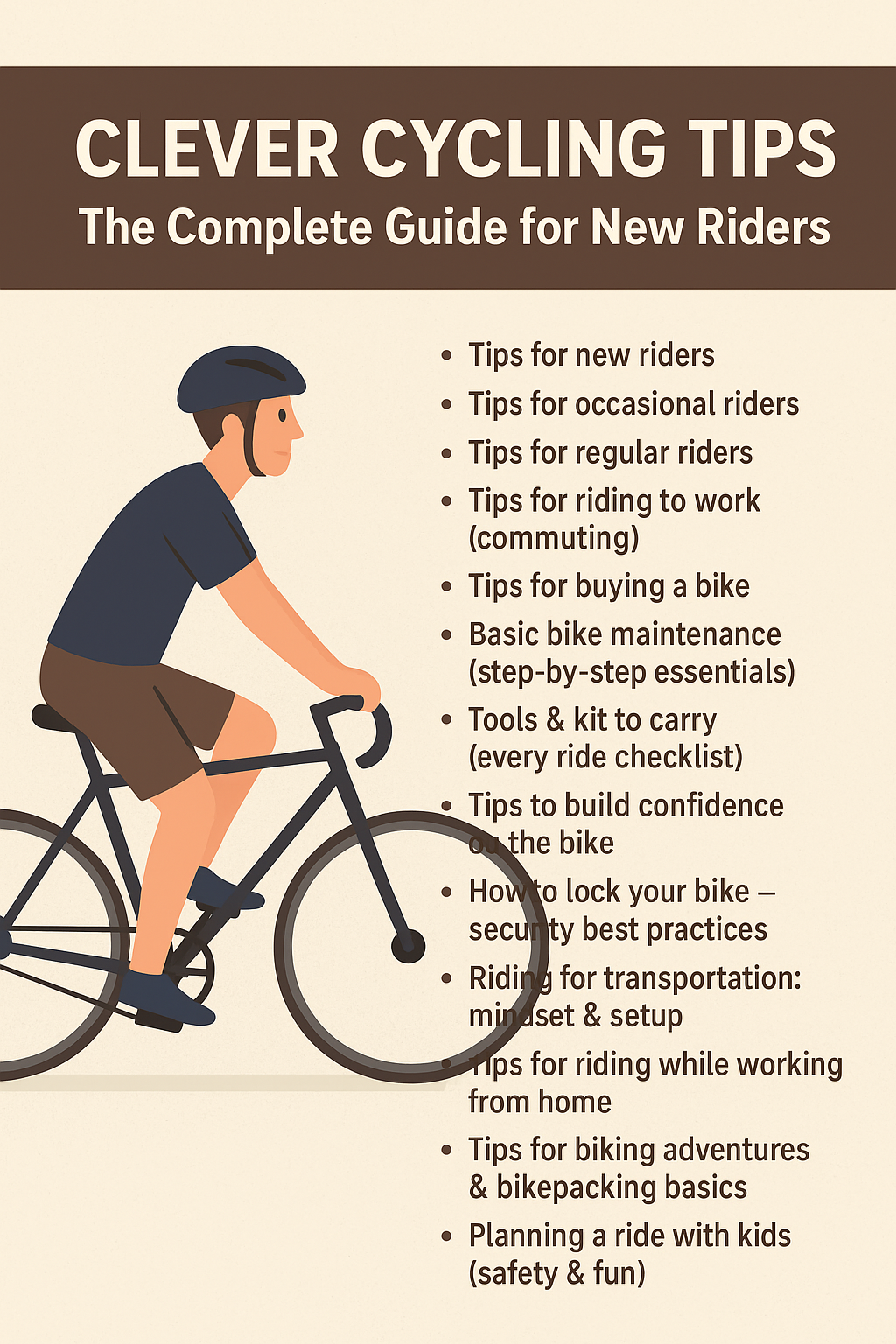
Tips for new riders
-
Tips for occasional riders
-
Tips for regular riders
-
Tips for riding to work (commuting)
-
Tips for buying a bike
-
Tips for riding in hot, humid or rainy climates (and winter basics)
-
Basic bike maintenance (step-by-step essentials)
-
Tools & kit to carry (every ride checklist)
-
Tips to build confidence on the bike
-
How to lock your bike — security best practices
-
Riding for transportation: mindset & setup
-
Tips for riding while working from home
-
Tips for biking adventures & bikepacking basics
-
Planning a ride with kids (safety & fun)
-
How to encourage more people to ride
-
How to find a group to ride with
-
Tips for riding in the dark (visibility & lights)
-
Commuting hacks — practical shortcuts
-
How to stay motivated to ride to work
-
Tips for riding in Islamic clothing
-
Tips for riding a bike during Ramadan
-
Ride with pride: tips for new LGBTQIA+ riders
-
How-tos: how features work & how to use the tips (setting goals, gear, cadence)
-
Why encouragement matters
-
Start here — small plan to get you rolling
1. Tips for new riders
Welcome. Start small. Your first rides are about habit and comfort, not speed or distance.
-
Start with short loops. 10–30 minutes around quiet streets is perfect for the first week. The goal is consistency.
-
Learn basic handling: braking smoothly, turning, shifting (if you have gears), and mounting/dismounting without wobbling.
-
Check your bike before every ride: tires inflated, brakes feel firm, quick visual of chain and saddle.
-
Wear a helmet that fits snugly and sits level on your head. It’s your simplest safety investment.
-
Practice balance: try gliding on a slight downhill with feet off pedals (scooting) or lowering saddle a bit to learn confidence.
-
Use a mirror early: a handlebar or helmet mirror helps you look back without swerving.
-
Stay predictable: keep a straight line, signal clearly, and avoid sudden moves.
2. Tips for occasional riders
You ride sometimes — weekends, errands. Keep your bike ready to go.
-
Keep tyres at recommended pressure. You lose feel when tyres are low — they also puncture easier.
-
A quick “pre-ride check” routine: look, listen, squeeze: look at tyres, listen for rubbing, squeeze brakes.
-
Store the bike in a dry place and keep the chain lightly lubricated to avoid stiffness.
-
Charge your lights even if you won’t ride at night — you might be delayed.
-
Use puncture-resistant tyres or a cheap sealant if you expect long gaps between rides.
3. Tips for regular riders
You cycle frequently. Make riding sustainable and rewarding.
-
Create a maintenance rhythm: weekly light cleaning, monthly brake and drivetrain checks, seasonal tune-ups.
-
Rotate training with recovery: even frequent riders need rest days and easy rides to avoid burnout.
-
Invest gradually in fit and comfort: a proper saddle and a correct saddle height make a huge difference.
-
Track basic metrics: time, distance, perceived effort (easy/hard) — this helps progress without obsessing about numbers.
-
Cross-train: quick yoga, core work, or even walking reduces injury risks and improves power.
4. Tips for riding to work (commuting)
Commuting by bike removes stress and adds movement to your day — with the right strategy.
-
Plan two outfit systems: panniers and a change of clothes at work, or use quick-dry technical clothes and a small towel.
-
Use fenders to avoid spray on rainy or wet roads.
-
Pack work essentials in a pannier, not a backpack — it’s better balanced and easier on your shoulders.
-
Keep a “commuter kit” at work: spare inner tube, pump, basic multi-tool, soap, and deodorant if needed.
-
Lock strategically: lock frame + rear wheel to an immovable object in visible, busy places.
5. Tips for buying a bike
Buying right saves money and frustration.
-
Decide your main use: commuting, fitness, gravel touring, or mountain? Each has an ideal bike type.
-
Types simplified:
-
Road — fast on pavement
-
Hybrid/commuter — comfy, practical
-
Gravel — versatile for mixed roads
-
Mountain — off-road durability
-
Single-speed / fixie — simple and low maintenance
-
Fit matters more than brand. A correctly sized frame and a good saddle are game changers.
-
Test-ride several bikes for comfort and handling. Try a few different frame sizes if possible.
-
Consider used bikes carefully: check frame alignment, rust, fork and headset play, wheel trueness, and component wear.
-
Budget for accessories: lights, lock, helmet, and a basic toolkit are part of the real cost.
6. Tips for riding in hot, humid, rainy climates (and winter basics)
If you ride in heat or monsoon seasons (or winter), adapt.
-
Hot/humid climates (like Bangladesh): wear breathable, loose technical clothing, ride early or late to avoid mid-day heat, carry water and electrolyte supplements, use sun protection (cap/visor, sunscreen), and slow down in the hottest hours.
-
Rainy days: fit fenders, use waterproof panniers or dry bags, protect your phone in a ziplock, lower tyre pressure slightly for better grip on wet surfaces, and brake earlier — wet rims/pads reduce stopping power.
-
Monsoon tips: clean and re-lubricate the chain after heavy rain to prevent rust; inspect spokes and hubs for water ingress.
-
Winter basics (if relevant): layer clothing (base, insulation, shell), use lights earlier, studded tyres if icy, and keep drivetrain cleaner to prevent salt damage.
7. Basic bike maintenance (step-by-step essentials)
A little maintenance goes a long way. Learn these basics.
Pre-ride quick check (the 60-second check)
-
Tires: look and squeeze — firm, no big cuts.
-
Brakes: squeeze both levers — they should feel solid.
-
Quick releases: closed and tight.
-
Chain & drivetrain: look for obvious damage and excessive grime.
Fixing a flat (tube tyre) — the short version
-
Remove wheel (release brakes if rim brakes).
-
Use tyre levers to pry the tyre off one side.
-
Pull out the tube, slightly inflate the new/old to find the hole.
-
Inspect tyre/tire-lining for glass or thorn and remove it.
-
Insert new tube, tuck the tyre bead back, inflate partway, recheck seating, fully inflate to recommended pressure.
(Patch kits are great, but spare tubes are faster when you’re commuting.)
Lubrication
Brake adjustments (rim brakes)
Wheels & spokes
When to go to a shop: headset/bottom bracket creaks, major gear skipping, hydraulic brake problems, wheel building, or anything involving bearings — professionals are worth the money.
8. Tools & kit to carry (every ride checklist)
Keep it light but useful.
-
Essentials: helmet, front & rear lights, mobile phone, ID/money.
-
Repair kit: spare tube (or patch kit), tyre levers, mini-pump or CO₂, multi-tool with chain tool if you can use it.
-
Optional: small first-aid, chain quick link, cable ties, patch glue, mini rag.
-
Commuter extras: small towel, deodorant, change of clothes in pannier.
9. Tips to build confidence on the bike
Confidence grows with small wins.
-
Practice in low-traffic places (park paths, empty car parks) to master braking and turning.
-
Drills: figure eights, slow riding (ride as slow as you can without losing balance), emergency braking practice.
-
Riding lines: pick a straight path, scan ahead, and look where you want to go (your bike usually follows your eyes).
-
Join a skills class or a “learn to ride” group — the steady, structured practice helps immensely.
10. How to lock your bike — security best practices
Bikes get stolen. Reduce the risk.
-
Use two locks of different types (U-lock + cable or folding lock) — thieves may carry tools for one style but not both.
-
Lock the frame and rear wheel to an immovable, well-lit object. If possible, position the lock so it’s off the ground and hard to lever.
-
Remove accessories (lights, saddle bags) that can be grabbed quickly.
-
Lock in high-traffic areas and avoid isolated spots. Photos of serial number and register the bike if possible.
11. Tips for riding for transportation (daily life)
Make your bike your everyday tool.
-
Plan trips in sequence: combine errands into one ride.
-
Use racks and panniers to carry groceries and keep your back free.
-
Have a “wet day plan”: waterproof panniers, plastic bag for clothes, and an umbrella for short walks to the shop.
-
Practice load handling: heavier bags shift handling; lower centre of gravity by using low panniers.
12. Tips for riding while working from home
If your commute is now optional, use the bike to create structure.
-
Use a “micro-commute”: a 15–30 minute loop before work to signal the start of the day.
-
Use the bike for breaks: 10–20 minute rides clear your mind and increase productivity.
-
Indoor trainer option: have a short routine of intervals for busy days; easy rides on a trainer are good substitutes.
13. Tips for biking adventures & bikepacking basics
Ready to explore beyond town?
-
Simplify your kit: lightweight panniers/trailer and a minimal toolkit.
-
Plan water and food stops especially on long rural routes.
-
Choose durable tyres and carry a spare tube.
-
Layer clothing and pack a rain shell.
-
Practice loaded handling: go on a short overnight before committing to multi-day.
14. Planning a ride with kids
Kids change the rules — safety and fun matter most.
-
Use approved child seats or trailers for different ages (rear child seat, trailer with harness, tag-along for older kids).
-
Shorter routes, frequent stops, snacks, and shade will keep the mood happy.
-
Teach basic signals and stopping safely before letting kids ride alone.
-
Helmets for everyone and check equipment harnesses before starting.
15. How can I encourage more people to ride?
Community change starts with small acts.
-
Share the joy: invite non-riders for a casual, slow group ride. No one left behind.
-
Host a “learn to ride” session at work or community centre.
-
Push for infrastructure: sign petitions for bike lanes and better parking.
-
Offer practical help: show how to fix flats, loan a helmet, or guide someone on route planning.
-
Celebrate small wins — share stories, photos, and an encouraging word.
16. How to find a group to ride with
Group riding accelerates skill and motivation.
-
Local bike shops often run social rides.
-
Online platforms: Meetup, Facebook groups, local cycling clubs, and Strava clubs are places to start.
-
Ask at café hubs or markets where riders gather.
-
Start your own small, friendly group: post a simple plan and a low-tempo “all abilities” ride.
17. Tips for riding in the dark (visibility & lights)
Dark rides require planning.
-
Lights front + rear: use a steady front beam and a flashing rear light (or both steady + flashing for maximal visibility).
-
Wear reflective clothing or bands and put reflectors on bags and wheels.
-
Reduce speed and increase following distance — drivers and you need more reaction time at night.
-
Avoid wearing dark clothing only; add a reflective vest if possible.
18. Commuting by bike: helpful hacks
Little tricks save time and stress.
-
Carry a small clothesline and detergent if you sweat a lot and want to rinse clothes at the office.
-
Keep a spare phone charger at work and a compact umbrella for sudden rains.
-
Use panniers with an easy-release system so you can quickly leave the bike and go inside.
-
Keep shoes at work if you use clipless pedals and don’t want to carry shoes.
19. How to stay motivated to ride to work
Motivation fades — build systems, not willpower.
-
Habit stacking: attach your ride to an existing habit (e.g., after morning tea).
-
Make it social: ride with a colleague or join a commuter group.
-
Set small, visible goals: stickers, calendar ticks, or a simple weekly target.
-
Reward yourself: small treats, a favourite coffee at the end of the week.
20. Tips for riding in Islamic clothing
Respectful, safe, practical solutions.
-
Choose breathable, non-flapping garments. Loose fabric can catch in chain or wheels — use clothing that is fitted at the wrists and ankles or use safety pins to secure loose hems.
-
Wear pants under long garments or use a cycling skirt/underpants design. Many riders use a lightweight, long tunic with tapered leggings underneath.
-
Secure headwear: use an innercap or sports style hijab that stays in place; avoid long, loose scarves that can catch. There are many sports hijabs designed for activity.
-
Visibility: choose high-visibility vests or add reflectors if the clothing is dark.
-
Footwear: closed shoes with good grip are best; avoid sandals for serious rides.
21. Tips for riding a bike during Ramadan
Respect the fast and listen to your body.
-
Adjust intensity: reduce efforts on fasting days — choose light rides over hard workouts.
-
Time rides smartly: ride after iftar for longer or harder rides when you can hydrate and eat, or pre-dawn (suhoor) for short low-intensity movement.
-
Keep rides short if fasting: a gentle 20–40 minute ride can aid circulation without heavy energy expenditure.
-
Hydrate well between sunset and dawn and eat balanced iftar/suhoor meals with complex carbs and proteins for sustained energy.
-
Respect personal limits — everyone’s tolerance is different; consult a health professional for intense training while fasting.
22. Ride with pride: tips for new LGBTQIA+ riders
Your comfort and safety matter. Enjoy the ride.
-
Find inclusive groups — many cities have LGBTQ+ cycling groups or welcome corners in larger clubs.
-
Ride with allies or in mixed groups at first for safety and support.
-
Be visible or blend in depending on your comfort level — choose clothing and accessories that reflect your safety needs.
-
Speak up about accessibility — ask local clubs/shop owners about inclusive policies and spaces.
-
Report harassment if it occurs; safe communities rely on accountability and support.
23. How-tos: how features work & how to get the most from the tips
Gearing basics (plain language)
-
More teeth on the front chainring = harder gear (more distance per pedal stroke).
-
Bigger cog at the rear = easier gear (good for climbing).
-
Cadence: aim for a comfortable pedalling rhythm — many riders target 70–90 rpm; the exact number depends on comfort and terrain. Shift before you lose momentum.
Brakes: rim vs disc
-
Rim brakes: simple, lighter, and easy to maintain, but performance drops in wet conditions.
-
Disc brakes: more consistent in rain and with better modulation; hydraulic disc brakes require professional maintenance if you need bleeding.
Tyre pressure & grip
-
Higher pressure = lower rolling resistance but a harsher ride.
-
Lower pressure = better grip and comfort, but risk pinch flats if too low. Adjust by load and road surface.
Setting goals (SMART & simple)
-
Specific: “Cycle to work twice a week.”
-
Measurable: distance or days.
-
Achievable: start small.
-
Relevant: aligned with your lifestyle.
-
Time-bound: a monthly or weekly target.
24. Why encouragement matters
Encouragement lowers the threshold to start and stay.
-
Psychology: people try things more often when someone believes they can. A small compliment after a ride can be transformational.
-
Community: riding with others provides accountability and safety.
-
Visibility: when riders are seen, cycling becomes normal for others — and infrastructure follows ridership.
25. Start here — a small plan to get you rolling (4-week starter)
Week 1 — Habit: 10–20 minute ride 3x this week on easy streets, pre-ride check each time.
Week 2 — Confidence: Add a skills session (20 minutes practice: slow riding, figure eights) + one 30 min gentle ride.
Week 3 — Practicality: Commute trial — ride to a nearby shop or café, carry a small bag, practice locking.
Week 4 — Social: Join or plan a casual, slow group ride. Celebrate one month of riding!
Welcome to BSMe2e, a vibrant platform brimming with exciting events, contests, and a thriving marketplace. We're committed to providing a fair and enjoyable experience for everyone – users, sellers, advertisers, and agents. To ensure a seamless journey, participation in any BSMe2e event or contest requires adherence to our comprehensive event policies.
BSMe2e Event Policies to Help You Participate with Purpose
- Users: Let your talents shine! BSMe2e offers a platform to showcase your skills, engage in skill-sharing, and seize opportunities. Remember, respect and integrity are the cornerstones of our community. For detailed guidelines, visit our dedicated policy page on Talent Competition Conditions.
- Sellers: Your storefronts are the lifeblood of our marketplace. To maintain a trustworthy environment, adhering to our Seller Service Policies is crucial. These policies cover everything from product listings to customer interactions, fostering a standardized and professional experience across all eStores. Explore the Terms and Conditions for a clear understanding.
- Advertisers: You're the storytellers, bringing brands and services to life with your creative ads. Your contributions fuel our ecosystem, and following our Advertisement Policies is essential. These guidelines ensure a respectful and lawful marketing practice, upholding the integrity of our advertising space. Dive deeper into the Advertisers Policies to craft impactful campaigns.
- Agents: As BSMe2e ambassadors, you play a pivotal role in fostering growth and connections. Following our Agent Program Policies equips you with the knowledge to excel and champion the values of our community.
Each event and contest has its own set of terms and conditions, detailed within specific policy pages. We highly recommend thoroughly reviewing these terms before engaging in any activity on our platform.
A Commitment to All
At BSMe2e, we wish to foster a community that celebrates innovation and mutual respect. Our policies support this commitment, ensuring every interaction is rooted in excellence.
Join the BSMe2e Journey
Unleash your potential, connect with a global audience, and be part of a futuristic marketplace that celebrates talent and entrepreneurship. At BSMe2e, your journey to success begins!


 ENG
ENG
Really enjoyed this — your insights make riding smarter feel so accessible. Keep pedaling and inspiring!