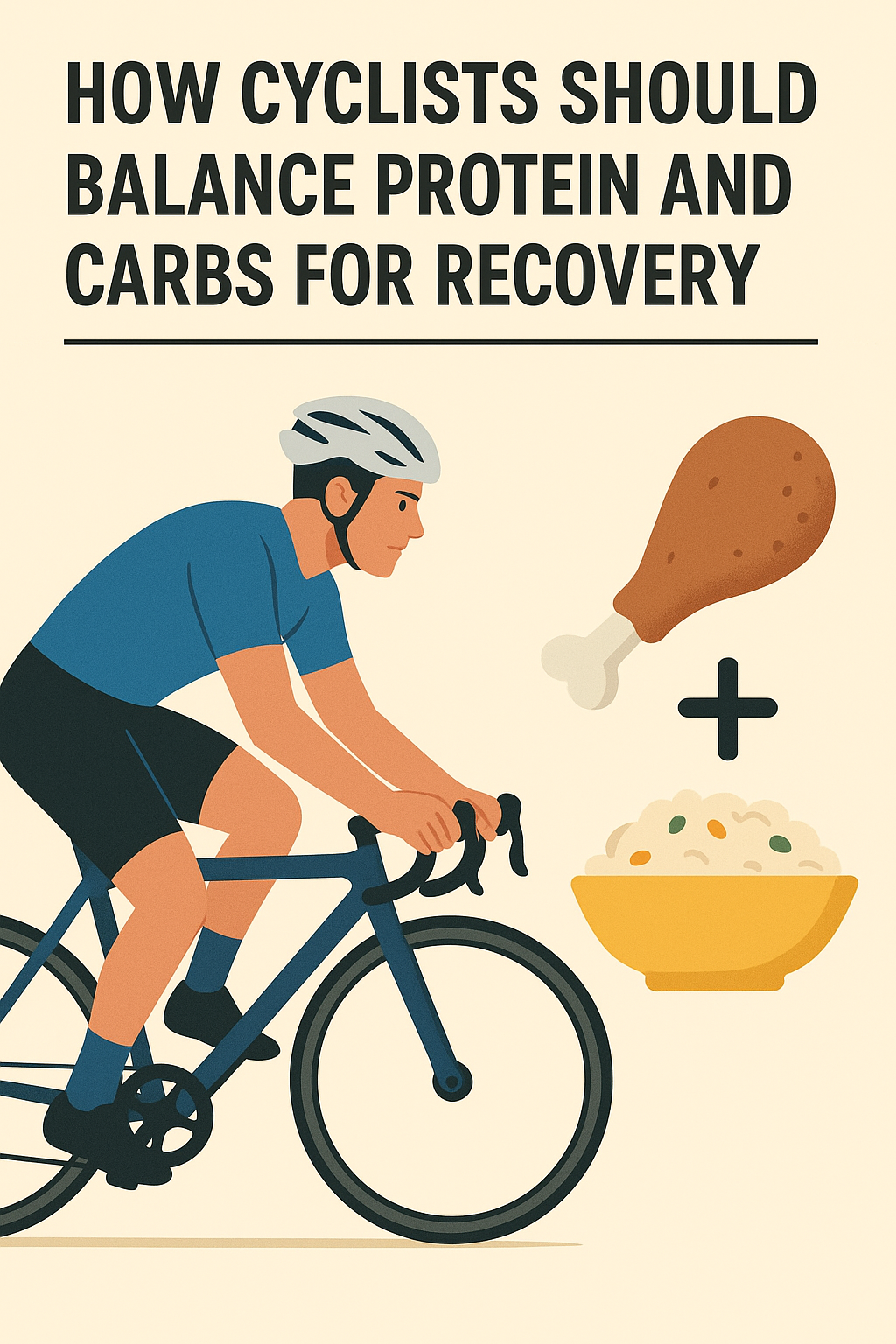
The Science, Strategy, and Smart Choices Behind Every Great Ride
Let’s be honest — the post-ride hunger is real.
You finish a long, gruelling ride, your legs are jelly, your heart rate is still high, and suddenly everything edible looks like a five-star meal. Pizza? Tempting. Biscuits? Too easy. Leftover rice? Gone in seconds.
But here’s the truth: what you eat right after your ride can either boost your recovery or delay your progress. Random snacking might fill your stomach, but it won’t refuel your muscles the right way. That’s where the science of balancing protein and carbohydrates comes in — and understanding it can make the difference between just riding often and truly becoming stronger over time.
🧠 Why Your Body Needs Both Protein and Carbs
Cycling is an endurance sport that burns through glycogen — the body’s stored form of carbohydrates — while also causing tiny muscle fiber damage (especially during climbs, sprints, or long-distance rides).
So, after your ride, your body enters a repair-and-rebuild mode:
Think of your body like a workshop:
-
The protein are the builders, bringing in materials and fixing broken structures.
-
The carbs are the power source, keeping the lights on so that rebuilding can actually happen.
Neglect one, and the other can’t do its job effectively.
🥩 The Protein Puzzle — Rebuilding from the Inside Out
Protein is made up of amino acids — your body’s building blocks for muscle repair and growth.
After a ride, your muscles are like workers waiting for materials. If protein isn’t supplied soon, the recovery process slows down dramatically.
🔹 How Much Protein Do Cyclists Need After a Ride?
Research suggests consuming about 0.14–0.23 grams of protein per pound of body weight within an hour after finishing your ride.
| Body Weight |
Protein Range After Ride |
| 120 lbs (54 kg) |
17–27 grams |
| 150 lbs (68 kg) |
21–35 grams |
| 180 lbs (82 kg) |
25–41 grams |
🔹 What Happens If You Don’t Get Enough Protein?
Remember: cycling doesn’t just burn calories — it stresses muscles, tendons, and your entire metabolic system. Protein ensures they come back stronger.
🔹 Best Protein Sources for Cyclists
| Type |
Examples |
Notes |
| Animal-based |
Eggs, chicken breast, fish, milk, yogurt |
Complete proteins with all amino acids |
| Plant-based |
Lentils, chickpeas, tofu, quinoa |
Combine multiple sources for full amino acid profile |
| Convenient |
Protein shakes, Greek yogurt, chocolate milk |
Great when you’re on the go or not hungry post-ride |
👉 Pro Tip: Aim for high-quality protein that contains leucine — an amino acid shown to trigger muscle recovery.
🍞 Carbs: The Underrated Hero of Recovery
Some people fear carbs like they fear flat tires.
But for cyclists, carbs are essential fuel — not the enemy.
When you ride, your body burns through stored glycogen in the liver and muscles. Without replenishing it, your next ride will feel like pedaling through wet cement.
🔹 How Much Carbohydrate Do You Need?
You need roughly 0.5–0.7 grams of carbohydrate per pound of body weight within the first 30 minutes after your ride.
| Body Weight |
Carbs Needed After Ride |
| 120 lbs (54 kg) |
60–84 grams |
| 150 lbs (68 kg) |
75–105 grams |
| 180 lbs (82 kg) |
90–126 grams |
Why so soon? Because in the first 30–60 minutes post-ride, your body’s glycogen “refilling” mechanism is at its fastest. Miss that window, and you slow down recovery by hours.
⚖️ Getting the Balance Right: The 3:1 or 4:1 Rule
Sports scientists have discovered a sweet spot: the carb-to-protein ratio.
A 3:1 or 4:1 ratio (carbs : protein) is ideal for endurance athletes like cyclists.
This ratio:
Example:
If you take 30g of protein, pair it with 90–120g of carbs for optimal recovery balance.
🍽️ Real-World Recovery Meal Ideas
You don’t need a nutrition degree to refuel properly — just a bit of planning.
Here are easy, science-backed recovery meals and snacks that fit real cyclists’ lives:
🚴♂️ Quick and Simple Options
-
Chocolate milk – Nature’s perfect 3:1 carb-to-protein ratio.
-
Greek yogurt + banana + honey – Smooth, sweet, and recovery-friendly.
-
Peanut butter and Jam sandwich on whole-grain bread – Balanced, cheap, and effective.
-
Protein smoothie with milk, oats, and frozen fruits – Ideal if you’re not hungry post-ride.
🍚 Balanced Home Meals
-
Rice with grilled chicken or tofu + vegetables
-
Lentil soup with flatbread and yogurt
-
Tuna pasta with olive oil and a boiled egg
-
Chickpea curry with brown rice
🕒 Timing Tip
Eat your recovery meal/snack within 30–60 minutes post-ride.
After 90 minutes, your body’s glycogen absorption rate slows down significantly.
⚠️ Common Nutrition Mistakes Cyclists Make
-
Skipping carbs for fear of weight gain
→ You’re not just burning calories — you’re restoring energy. Without carbs, your muscles stay empty.
-
Waiting too long to eat
→ The “glycogen window” closes fast. Have at least a banana or chocolate milk immediately if you can’t eat a full meal right away.
-
Overloading on protein shakes
→ More protein doesn’t always mean more recovery. The excess is just burned or excreted — and you may still feel tired due to lack of carbs.
-
Ignoring hydration and electrolytes
→ Protein and carbs won’t work if your body is dehydrated. Drink water or a rehydration mix to help nutrient absorption.
🧃 Bonus: Beets, Coffee, and Other Recovery Boosters
-
Beetroot juice: Rich in nitrates that improve oxygen efficiency and speed up recovery.
-
Coffee (in moderation): Can help reduce muscle soreness and fatigue perception.
-
Tart cherry juice: Shown in studies to reduce inflammation and muscle pain.
-
Coconut water + salt pinch: Natural electrolyte replenisher if you’re avoiding commercial drinks.
🔍 Finding Your Sweet Spot
Every cyclist is different — metabolism, muscle type, and training volume all affect recovery needs.
Some riders recover well on a higher-carb plan; others prefer slightly more protein.
👉 Experiment:
Track how you feel the next morning after different recovery meals:
-
Do your legs feel heavy? Maybe you need more carbs.
-
Feel bloated or sluggish? Maybe less fat or a lighter meal.
-
Feel strong and energized? You’ve found your formula.
💬 The Bottom Line
Balancing protein and carbs isn’t about chasing perfection — it’s about understanding your body’s rhythm.
Recovery nutrition is a continuation of your training, not an afterthought.
When you fuel wisely:
So next time you finish a ride, skip the random snacks and reach for the right combo. Your body — and your next ride — will thank you.
Now, if you’ll excuse me, I’ve got a date with a banana, peanut butter, and a cold glass of chocolate milk.
Welcome to BSMe2e, a vibrant platform brimming with exciting events, contests, and a thriving marketplace. We're committed to providing a fair and enjoyable experience for everyone – users, sellers, advertisers, and agents. To ensure a seamless journey, participation in any BSMe2e event or contest requires adherence to our comprehensive event policies.
BSMe2e Event Policies to Help You Participate with Purpose
- Users: Let your talents shine! BSMe2e offers a platform to showcase your skills, engage in skill-sharing, and seize opportunities. Remember, respect and integrity are the cornerstones of our community. For detailed guidelines, visit our dedicated policy page on Talent Competition Conditions.
- Sellers: Your storefronts are the lifeblood of our marketplace. To maintain a trustworthy environment, adhering to our Seller Service Policies is crucial. These policies cover everything from product listings to customer interactions, fostering a standardized and professional experience across all eStores. Explore the Terms and Conditions for a clear understanding.
- Advertisers: You're the storytellers, bringing brands and services to life with your creative ads. Your contributions fuel our ecosystem, and following our Advertisement Policies is essential. These guidelines ensure a respectful and lawful marketing practice, upholding the integrity of our advertising space. Dive deeper into the Advertisers Policies to craft impactful campaigns.
- Agents: As BSMe2e ambassadors, you play a pivotal role in fostering growth and connections. Following our Agent Program Policies equips you with the knowledge to excel and champion the values of our community.
Each event and contest has its own set of terms and conditions, detailed within specific policy pages. We highly recommend thoroughly reviewing these terms before engaging in any activity on our platform.
A Commitment to All
At BSMe2e, we wish to foster a community that celebrates innovation and mutual respect. Our policies support this commitment, ensuring every interaction is rooted in excellence.
Join the BSMe2e Journey
Unleash your potential, connect with a global audience, and be part of a futuristic marketplace that celebrates talent and entrepreneurship. At BSMe2e, your journey to success begins!


 ENG
ENG