Body fat isn’t something to feel guilty about. For cyclists, it’s more like a setting you can adjust – not a judgment on who you are.
Get it right, and you ride better. Push it too far, and your body starts to struggle.
Why Body Fat Matters (But Not the Way You Think)
Cycling performance comes down to one key idea:
How much power you produce vs. how much weight you carry.
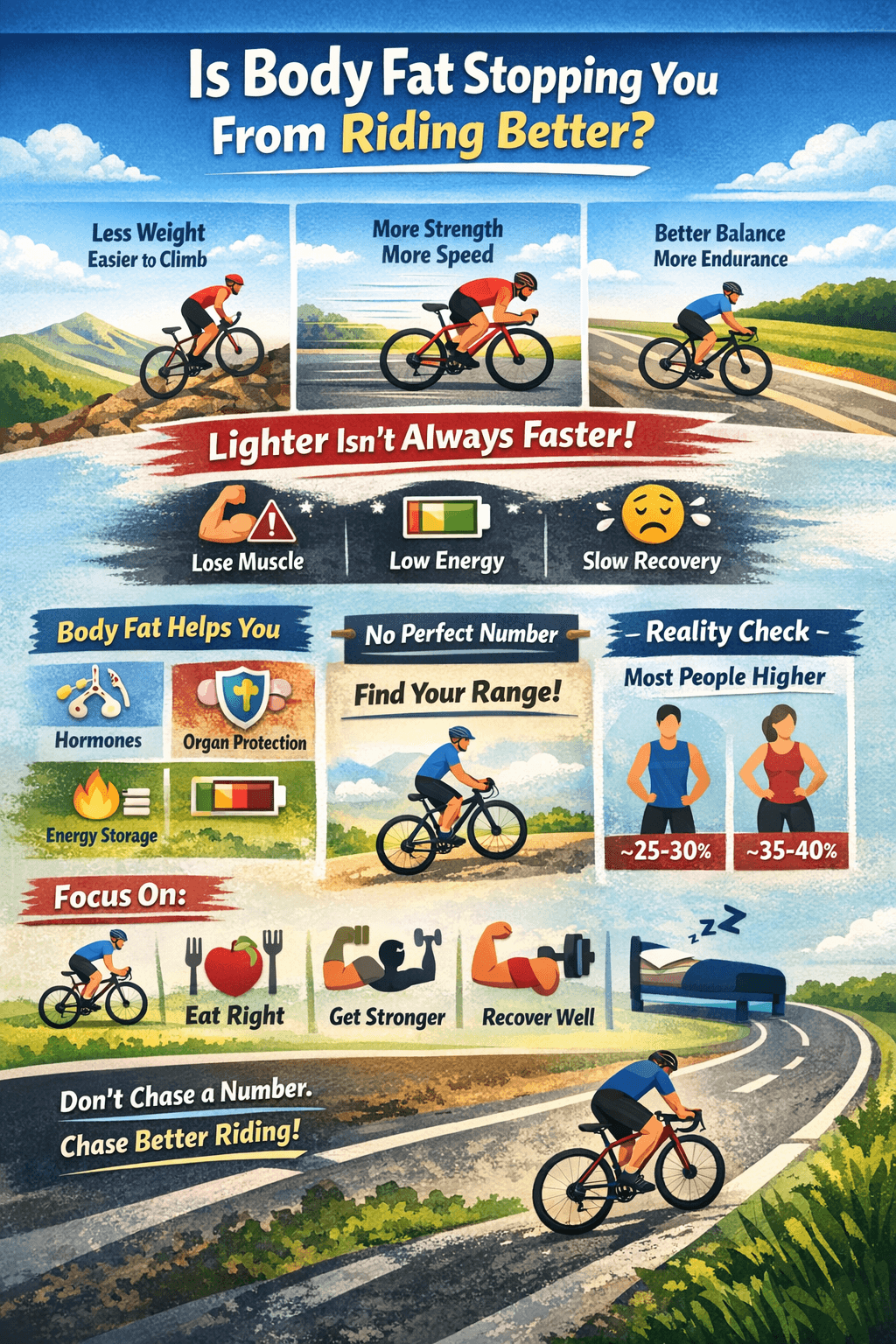
Less extra weight → easier climbing
More strength → more speed
Better balance → better endurance
So yes, body fat plays a role. But here’s the truth:
Being lighter doesn’t always make you faster.
If you try to lose fat too quickly:
You can lose muscle (bad for power)
Recovery becomes slower
Energy drops
Performance actually goes down
The strongest riders are not just light—they are well-fueled and powerful.
Body Fat Has a Job
Your body fat isn’t useless. It actually helps you:
Produce hormones
Protect your organs
Store energy for long rides
If you go too low, your body starts “cutting corners” in important systems. That’s when problems begin.
There Is No Perfect Number
A lot of people search for the “ideal body fat %.”
That number doesn’t exist.
What’s best for you depends on:
Your age
Your gender
Your training level
Your goals
For example:
A racer might aim lower
A daily rider might stay in the middle
A beginner should focus on consistency, not fat loss
Your body changes over time—and your ideal range changes too.
What Are Good Ranges?
Instead of one number, think in ranges:
For Men (rough idea)
Competitive riders: leaner range
Regular riders: moderate range
Health focus: wider range
As you get older, these ranges naturally go up. That’s normal—not failure.
For Women
Women naturally have higher body fat—it’s part of healthy biology.
Same idea:
Competitive → lower range
Recreational → middle
Health → wider
Again, the numbers increase slightly with age.
Reality Check: Most People Are Higher
Compared to the general population:
Most men are around 25–30%
Most women are around 35–40%
Cyclists—even casual ones—are usually fitter than average.
So don’t compare yourself to random people.
Compare yourself to your own progress.
Measuring Body Fat (Don’t Overthink It)
Different tools give different results:
Home scales → easy but not very accurate
Gym scans (InBody) → better, still affected by water
DEXA → most accurate, but expensive
What matters most:
Use the same method and track changes over time.
The Real Goal
Don’t chase a number.
Chase better riding.
Focus on:
Riding consistently
Eating properly
Getting stronger
Recovering well
If your body fat improves along the way, great.
If not, but you’re riding stronger and longer—that’s still a win.
Cycling isn’t about being the lightest rider.
It’s about being the strongest version of yourself on the bike.
Ride more. Fuel properly. Stay consistent.
Your body will adjust.
Your performance will follow.
Extra Notes for Everyone
1. Health Is Bigger Than a Number
Body fat % is just one measurement. It does not define your health or worth.
Focus more on:
Energy levels
Daily movement
Strength
Sleep quality
If these are good, you’re already doing well.
2. Your Lifestyle Shapes Your “Ideal”
A delivery rider, office worker, and homemaker all live different lives.
Busy job → need energy and stamina
Home routine → need mobility and consistency
Hobby rider → need balance and enjoyment
There is no single “perfect body” for everyone.
3. Move More, Even in Small Ways
You don’t need intense workouts.
Simple things matter:
Walking more
Taking stairs
Short rides
Doing chores actively
Small daily movement builds long-term health.
4. Don’t Starve to Look Fit
Eating too little can cause:
Low energy
Mood swings
Weakness
Poor focus
Eat to function well, not just to look a certain way.
5. Strength Matters for Daily Life
Being strong helps with:
Carrying groceries
Climbing stairs
Working long hours
Avoiding injuries
You don’t need a gym—bodyweight exercises or daily activity is enough to start.
6. Energy Is the Real Goal
Ask yourself:
Do I feel active during the day?
Can I do my tasks without getting exhausted quickly?
If yes → you’re on the right track.
7. Progress Is Personal
Don’t compare yourself to:
Athletes
Social media
Friends
Your body, your routine, your pace.
Even small improvements count.
8. Balance Beats Extremes
Extreme dieting or overtraining usually backfires.
Better approach:
Eat normal, balanced meals
Stay active regularly
Rest properly
That’s sustainable for life.
Final Thought
Whether you ride a cycle, work a job, run a home, or just move through your day—
Your goal is not to chase a number.
Your goal is to feel stronger, healthier, and more capable in your everyday life.
And if cycling is part of that journey—even better. 🚴