Welcome to BSME2E
Live
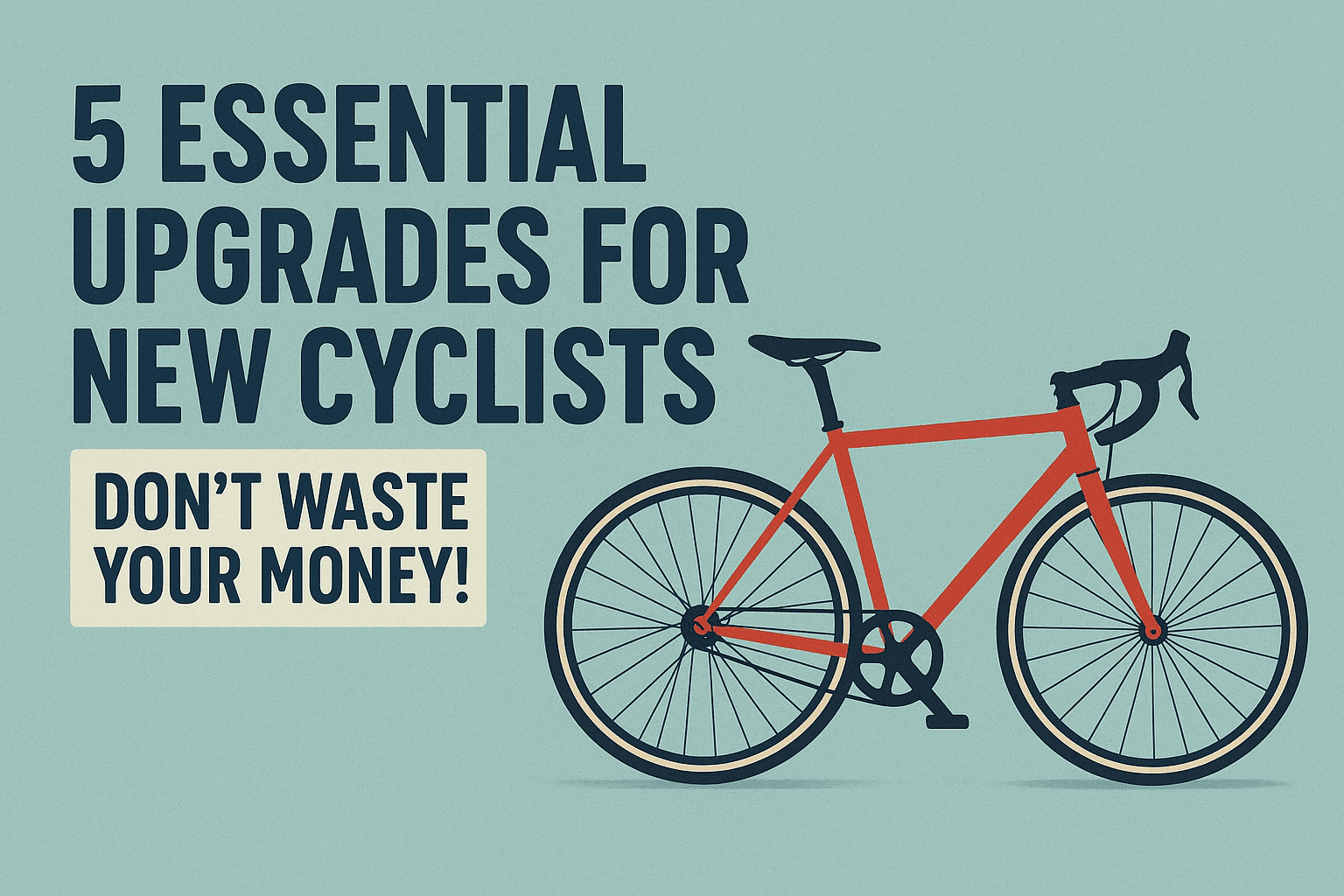
Cycling is one of the most rewarding activities you can take up—it’s transportation, exercise, adventure, and even meditation on two wheels. But as soon as someone gets their first bike, the temptation to start upgrading hits fast. The cycling industry doesn’t make it any easier either: everywhere you look, there are ads for expensive carbon wheels, electronic shifting, and aerodynamic helmets that promise to make you faster, stronger, and more comfortable.
The truth? Most new cyclists don’t need 90% of what the shops will try to sell them. In fact, if you’re just starting out, splurging on the wrong upgrades is one of the fastest ways to waste money and lose motivation.
This guide will walk you through five essential upgrades worth making as a new cyclist—the ones that genuinely improve your riding experience. I’ll also explain which flashy “upgrades” you can skip for now, saving your hard-earned money for later when you’re more experienced and know what you actually need. Along the way, I’ll add notes and practical tips so you’ll understand not just what to upgrade, but why.
If you remember one thing from this article, let it be this: comfort matters more than speed when you’re starting out. And nothing influences comfort more than your saddle.
Too many beginners assume that expensive carbon frames or lightweight wheels will make the biggest difference. But if your saddle doesn’t fit your anatomy and riding style, every ride will feel like punishment.
A well-fitted saddle prevents numbness, chafing, and back pain.
It helps you maintain proper posture and pedal efficiently.
Comfort means longer rides, and longer rides mean better fitness and skills.
Saddles are personal—what works for one rider may feel terrible for another. Don’t just copy what your friend is using.
Many bike shops offer saddle fitting tools or demo programs that let you test saddles before buying. Use them.
Don’t assume that more padding = more comfort. Sometimes, too much squish causes pressure in the wrong places.
💡 Pro Tip: If you can’t afford a new saddle yet, at least invest in padded cycling shorts. They’re like suspension for your body.
Think of your tires as your bike’s shoes. No matter how nice your bike is, if the “shoes” are cheap, worn out, or not suited to the road, you’ll suffer.
Good tires reduce rolling resistance, making pedalling easier.
They improve traction, especially in rain or cornering.
Puncture-resistant tires save you from being stranded on the side of the road.
Don’t go ultra-lightweight just yet. Race tires are fast but fragile, and constantly fixing flats is demotivating.
Choose tires suited to your riding environment: wider, puncture-protected ones for commuting; slicker ones for road training.
Even upgrading from stock “cheap rubber” tires to mid-range quality ones feels like night and day.
💡 Pro Tip: Learn how to check tire pressure and inflate properly. Running your tires too soft wastes energy, while overinflated tires feel harsh and reduce grip.
Many beginners stick with the flat pedals their bike came with, but upgrading to clipless pedals (where your shoes “clip in” to the pedal) is one of the most transformative changes you can make.
You can push and pull, giving you more power per stroke.
Better foot stability reduces fatigue on long rides.
Pedals designed for your style (road, MTB, commuting) improve handling.
Don’t be intimidated—everyone falls once or twice learning to unclip. It’s part of the process.
Start with “dual-sided” pedals (clipless on one side, flat on the other) if you’re nervous.
Invest in decent cycling shoes that fit snugly but not painfully.
💡 Pro Tip: If you’re commuting in city traffic, consider shoes with recessed cleats (like MTB shoes). You can walk normally in them without slipping.
No upgrade is more essential than the ones that keep you alive. Even if you don’t plan to ride at night, good lights and visibility gear are worth it—because weather, late rides, or dark tunnels can sneak up on you.
Front lights make you visible to cars and help you see hazards.
Rear lights are non-negotiable for road safety.
Reflective clothing or accessories boost visibility in low-light conditions.
Skip the cheap $5 blinkers. Get USB-rechargeable lights with strong lumens and multiple modes.
Mount lights correctly: rear light should be at driver’s eye level, not hidden by your saddlebag.
Don’t forget reflective tape or bands—it’s cheap and effective.
💡 Pro Tip: A high-vis vest may feel overkill, but it dramatically increases your chance of being noticed in traffic.
Imagine this: you’re 15 km from home, your tire goes flat, and you have no way to fix it. Suddenly, that shiny new bike feels useless. That’s why the most underrated upgrade for beginners is a basic repair kit and tools.
Gives you the freedom to ride farther without fear of breakdowns.
Builds confidence—you’re no longer at the mercy of strangers or luck.
Saves money: repairing your own punctures costs pennies compared to shop visits.
At minimum, your kit should include:
Spare tube (or two)
Tire levers
Mini pump or CO₂ inflator
Multi-tool with Allen keys
💡 Pro Tip: Practice changing a flat at home. It’s frustrating at first, but once you know how, it becomes second nature.
Before you start throwing money at carbon fiber or fancy electronics, here’s what you should avoid early on:
Aero wheels – They look amazing, but unless you’re racing, they’re not worth the thousands you’ll spend.
Electronic shifting – Cool tech, but regular mechanical gears work perfectly fine and are far easier to fix.
Top-end groupsets – Upgrading from Shimano Sora to Ultegra won’t make you fitter. Build your legs first.
Power meters – Useful for training, but new riders benefit more from learning to ride by feel.
Expensive carbon frames – Your first bike should teach you skills, not empty your wallet.
Cycling is a journey, not a shopping spree. As a new cyclist, the smartest thing you can do is focus on upgrades that make your rides safer, more comfortable, and more enjoyable. That means:
A proper saddle
Good tires
Clipless pedals and shoes
Lights and visibility gear
A reliable tool kit
Once you’ve built fitness, developed your riding style, and spent hundreds of happy hours on the saddle, then you’ll truly understand which high-end upgrades are worth it for you.
So don’t waste your money chasing pro-level gear too soon. Instead, invest wisely in the basics, and your cycling journey will be smoother, safer, and far more fun.