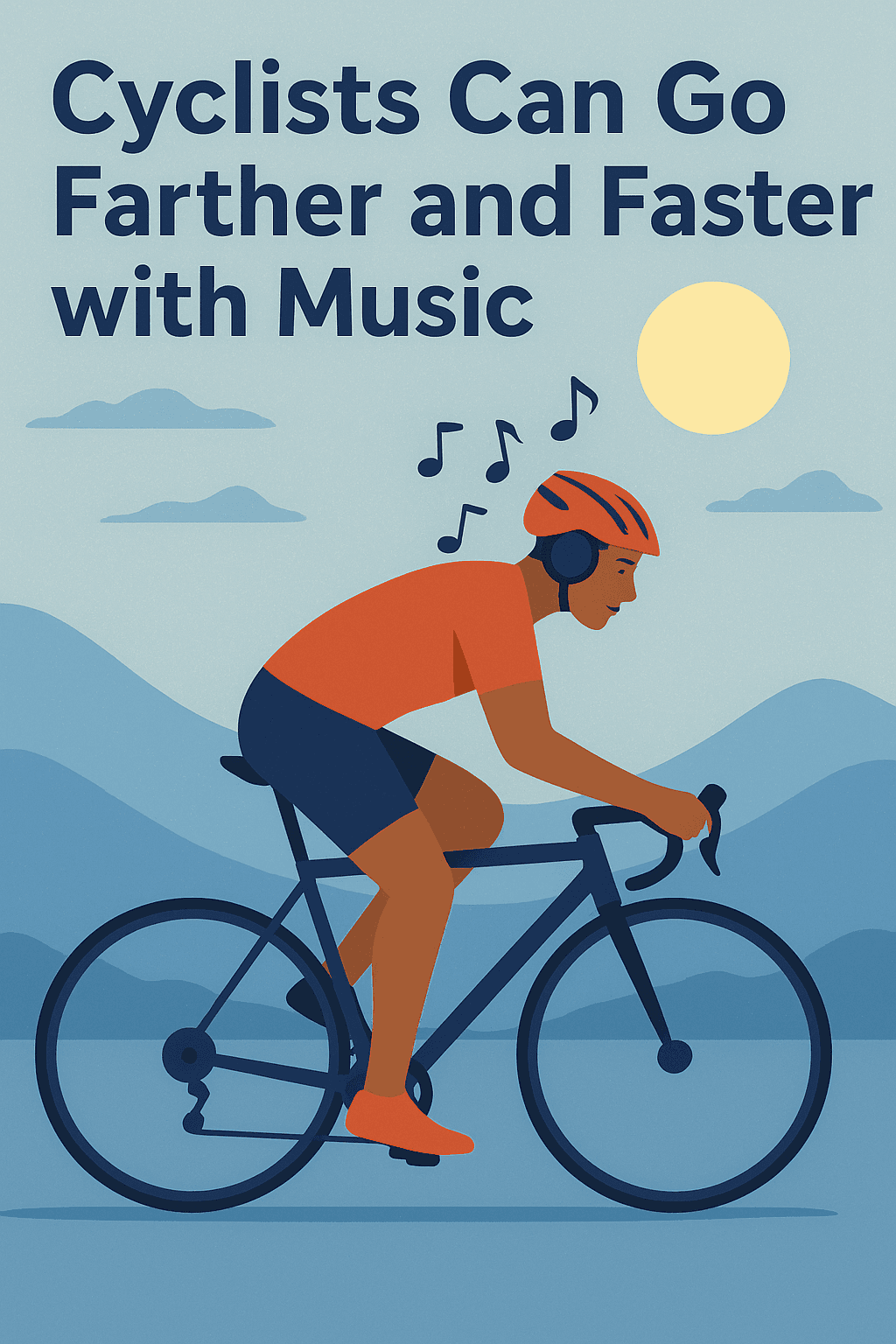
You’re halfway up a steep climb. Your quads are screaming, your breathing feels ragged, and you’re wondering why you ever decided to take this route. Then, your favourite track kicks in—something upbeat, familiar, and driving. Suddenly, your cadence lifts. Your legs feel lighter. The summit doesn’t look so far anymore.
Sound familiar? That’s the power of music in cycling.
And it’s not just your imagination—science proves that music can change your brain chemistry, alter your perception of fatigue, and even help you ride farther and faster. Let’s dive deep into how music impacts cycling, what the research says, and how you can harness it to make every ride smoother, stronger, and more enjoyable.
🎵 Why Music Works: The Science of Sound and Speed
Music isn’t just background noise—it has measurable effects on the body and mind. Researchers have been studying how music influences exercise performance for decades, and the findings are surprisingly consistent:
-
Cyclists listening to music can ride up to 1.25 km/h faster in a 10 km time trial compared to riding in silence.
-
Music stimulates the release of dopamine and serotonin, neurotransmitters linked to motivation, pleasure, and endurance.
-
Listening to upbeat tracks can lower perceived exertion—meaning a tough interval feels less painful when paired with the right song.
In simple terms: music doesn’t just make you feel better, it changes how your body experiences effort.
🧠 How Music Changes Your Cycling Experience
-
Rhythmic Synchronization
Your brain naturally tries to match movement to rhythm. When the beat of the music lines up with your pedalling, it smooths out your cadence and helps conserve energy.
-
Pain Distraction (Dissociation)
Fatigue is partly mental. Music distracts your brain from the “burn” in your muscles by keeping it busy with rhythm, lyrics, and anticipation.
-
Motivation & Mood Boost
That “second wind” feeling often comes from music-triggered dopamine release, which fuels motivation and positivity.
-
Physiological Benefits
Studies show music can regulate breathing patterns and heart rate, improve oxygen efficiency, and help you stay in rhythm on endurance rides.
🚴 Indoor Training vs. Outdoor Riding
Indoor Training: Your Personal Cycling Concert
-
Perfect environment to go all-in with music.
-
Use playlists tailored to specific workouts:
-
Warm-ups → steady, mid-tempo tracks.
-
Intervals → high-energy, fast BPM.
-
Cool-downs → relaxed, calming tunes.
-
Pro tip: Smart trainers and virtual apps (Zwift, Rouvy, TrainerRoad) pair beautifully with music—making indoor rides feel less like a chore and more like a session.
Outdoor Riding: Safety First
Music outdoors adds motivation, but awareness is critical. Cars, pedestrians, and other cyclists require your attention.
-
Use bone conduction headphones (they transmit sound through your cheekbones while keeping your ears open).
-
Or ride with one earbud only, leaving the other ear free for traffic sounds.
-
Keep volume low enough that you can still hear a car horn or someone calling out.
💡 Note: In some regions, wearing headphones while cycling is restricted. Always check local laws and prioritize safety.
🎶 Matching Music to Ride Types
Just like nutrition or gearing, music works best when it’s tailored to the situation.
-
Endurance rides → steady, rhythmic songs (125–135 BPM) keep you consistent.
-
Climbs → motivational anthems with strong build-ups push you through the grind.
-
Sprints/Intervals → fast, high-energy tracks (135–150 BPM) match explosive effort.
-
Recovery rides → mellow, easy-listening music helps you spin without overexertion.
Think of your playlist as another training tool, just like your power meter or nutrition plan.
⚠️ Common Mistakes When Using Music in Cycling
-
Too Loud = Unsafe
If you can’t hear your own breathing or nearby traffic, it’s too loud.
-
Wrong BPM for the Ride
A slow ballad won’t help with intervals, and a frantic 160 BPM track might make a recovery ride stressful.
-
Using Random Playlists
Shuffle is fun, but for structured training, create playlists that match intensity phases.
📋 Tips to Make Music Work for You
-
Build different playlists for training types (intervals, endurance, recovery).
-
Experiment with genres—rock, EDM, funk, even classical can all work depending on tempo.
-
Use apps like Spotify or SoundBPM analysers to check track tempos.
-
For group rides, consider leaving the music at home—you’ll need communication.
🎼 Sample Playlist for Cyclists
Here’s a curated 10-song cycling playlist designed for riders in their 40s–60s, balancing nostalgia with science-backed BPM ranges (125–140 BPM):
-
Don’t Stop Believin’ – Journey (129 BPM)
Great for long climbs when motivation dips.
-
Eye of the Tiger – Survivor (139 BPM)
Classic training anthem, ideal for intervals.
-
Start Me Up – The Rolling Stones (132 BPM)
Perfect opener to ease into rhythm.
-
Born to Run – Bruce Springsteen (146 BPM)
Slightly above range, excellent for pushing hard.
-
Another One Bites the Dust – Queen (110 BPM)
Great for steady cruising and recovery.
-
Walking on Sunshine – Katrina & The Waves (137 BPM)
Uplifting track that matches endurance pace.
-
Sweet Home Alabama – Lynyrd Skynyrd (129 BPM)
Steady beat for consistent efforts.
-
Beat It – Michael Jackson (139 BPM)
Ideal for high-intensity sprints.
-
You Shook Me All Night Long – AC/DC (127 BPM)
Matches natural cadence, perfect mid-ride boost.
-
I Ran – A Flock of Seagulls (140 BPM)
Great finale for finishing strong.
🏁 Music as a Training Tool
Music isn’t just about making cycling more fun—it’s a scientifically proven performance enhancer. With the right playlist, you can:
-
Ride farther with less perceived effort.
-
Push harder during intervals without noticing the pain as much.
-
Maintain smoother cadence and breathing.
-
Turn dull indoor sessions into something you look forward to.
But above all—stay safe. Use common sense when riding outdoors, balance enjoyment with awareness, and remember: the best playlist is one that makes you want to keep pedalling.
So next time you saddle up, don’t just grab your helmet and water bottle—bring along your soundtrack. Your legs (and your brain) will thank you.