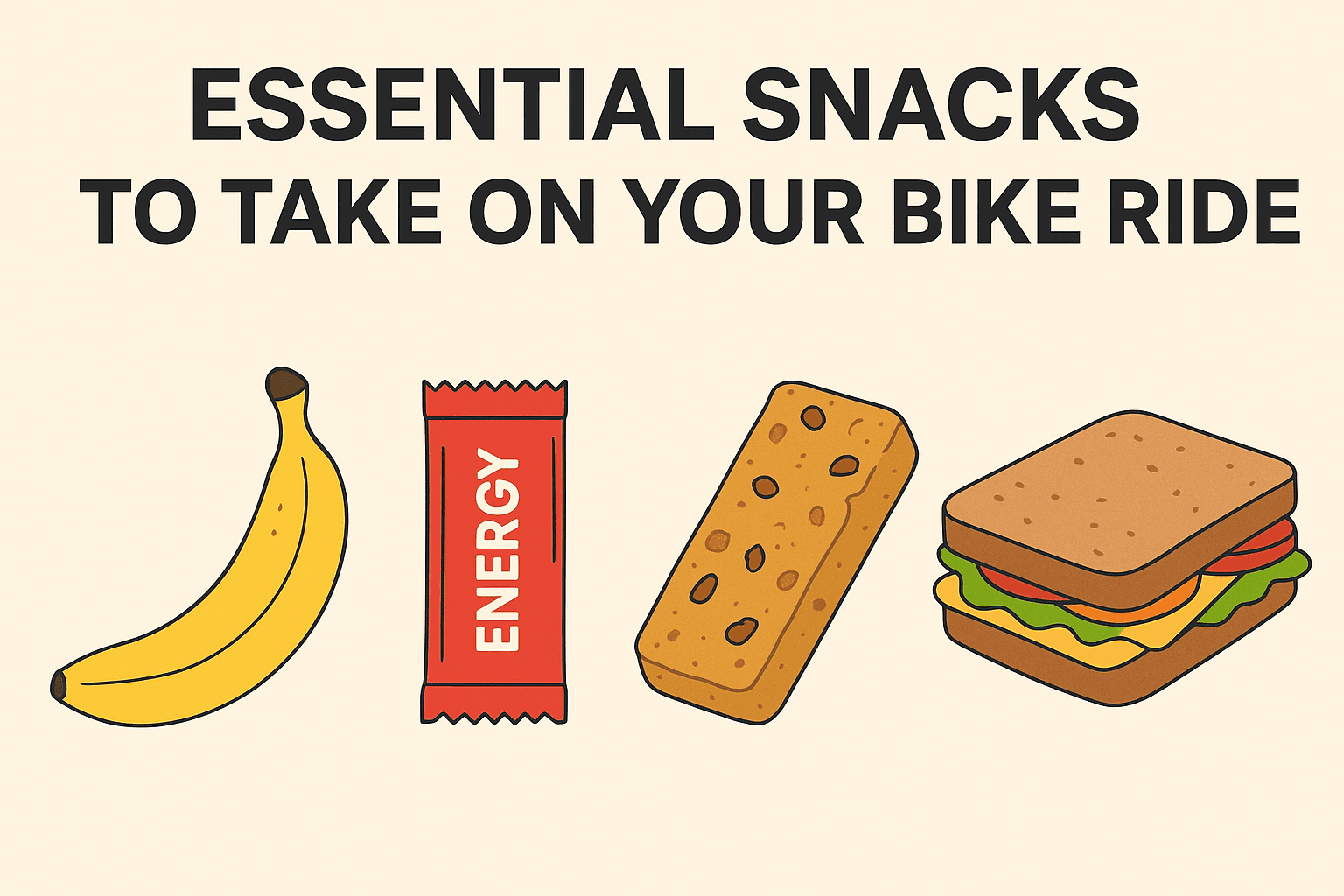
From Banana Boosts to Rice Cake Magic — The Complete Guide to Mid-Ride Nutrition
Let’s be honest — few things feel worse on a ride than bonking.
And no, we’re not talking about bumping your head or anything risqué — we mean that awful, empty, dizzy, lightheaded moment when your body runs out of fuel and your legs suddenly feel like blocks of concrete.
Every cyclist — from casual weekend riders to pro racers — has experienced this energy crash at least once. It’s your body’s desperate way of saying, “I’m out of glycogen, buddy — feed me or I’m done.”
The good news?
Bonking is totally preventable.
All it takes is smart, steady fueling — and the right snacks at the right time.
Whether you’re preparing for a 20 km joyride, a 100 km endurance ride, or a full-day delivery shift on two wheels, what you eat during your ride matters just as much as what you eat before or after it.
⚡ Why Snacks Matter on the Bike
Cycling burns calories fast — anywhere between 400 to 800 calories per hour, depending on speed, terrain, and body weight.
Most of that energy comes from glycogen, the carbohydrate fuel stored in your muscles and liver.
But here’s the catch: your body only stores enough glycogen for about 90–120 minutes of moderate-intensity riding. After that, your tank runs dry — unless you start refueling while still pedaling.
That’s where snacks come in.
Think of them as mini refills for your engine — small, frequent bites that keep energy levels steady, prevent fatigue, and maintain mental focus.
The key is finding the right balance of carbohydrates, electrolytes, and protein — and choosing snacks that are:
🍌 Natural Energy Booster Snacks
Mother Nature’s Fuel Station on Two Wheels
Before fancy gels and energy bars, cyclists relied on real food — fruits, nuts, and grains.
Turns out, nature already had the perfect formula for endurance energy.
These snacks are simple, affordable, and eco-friendly — plus, they don’t require any chemical additives or artificial flavours.
🍌 Bananas — Nature’s Energy Gel
If cycling had a mascot, it might be the banana.
It’s portable, cheap, biodegradable, and perfectly shaped for jersey pockets (even if it does get a little mashed sometimes).
A single banana provides:
-
25–30 grams of carbohydrates
-
400–450 mg of potassium
-
Natural sugars (glucose, fructose, sucrose) that digest quickly
-
Zero fat and minimal fiber, so it won’t upset your stomach
👉 Pro Tip: Eat half a banana every 30–40 minutes on long rides to keep energy levels stable.
Yes, it might turn into banana mush after an hour in your pocket, but trust me — it’s still worth it. Just don’t lean back with it still in your jersey… that’s a mistake many of us have made more than once!
🌴 Dates — The Sweet Powerbombs
Dates are essentially natural energy bars.
Each one packs about 20 grams of sugar, along with potassium, magnesium, and fiber. They digest faster than you’d expect and provide a steady glucose release — making them ideal for sustained endurance.
They’re also:
👉 Cyclist Tip: Mix dates with a few almonds or a sprinkle of salt to create a balanced mini-snack that adds electrolytes and slows the sugar spike.
Follow it up with unsweetened tea or water to rinse away the sticky residue — your dentist will thank you.
🍭 Sweet Pick-Me-Up Snacks
Quick Sugar Hits for When You’re Running Low
Sometimes you don’t want “nutrition.” You want something that works — fast.
That’s where simple sugars come in. They get absorbed quickly into your bloodstream and deliver an instant boost when your energy dips.
These aren’t necessarily “healthy,” but they are practical — and sometimes lifesaving during long climbs or unexpected bonks.
🍬 Gummy Candies (Jelly Babies, Haribo, etc.)
Let’s be honest — cyclists and kids share one thing in common: a love for gummy candy.
Five to seven gummies can provide 25–30 grams of carbs, roughly equivalent to one energy gel, but at a fraction of the price.
They’re also:
-
Pocket-proof: they don’t melt or leak
-
Customizable: you can portion exactly how much you need
-
Mood-lifting: there’s something mentally energizing about eating candy during a tough ride
👉 Pro Tip: Alternate between gummies and water or electrolyte drink to avoid sticky fingers and sugar crashes.
🍧 Ice Pops — Cool and Sweet Relief
On scorching days, nothing feels better than an ice pop after a hot climb.
Each pop has around 8–12 grams of carbs, which isn’t much, but the cooling effect can make a huge difference in comfort and performance.
Just skip the creamy ice creams — dairy and fat slow digestion, which isn’t ideal mid-ride.
Stick to water- or fruit-based popsicles when possible.
🥨 Savoury Sustenance Snacks
Because You Can’t Survive on Sugar Alone
After an hour or two of sweet snacks, your taste buds start to revolt. That’s when salty, savoury options come to the rescue. They not only satisfy cravings but also help replenish sodium, one of the key electrolytes lost through sweat.
🌰 Trail Mix — The Portable Powerhouse
A classic endurance snack that delivers a mix of fast and slow-release energy.
A good trail mix usually contains:
-
Nuts (for healthy fats and protein)
-
Seeds (for minerals like magnesium)
-
Dried fruits (for natural sugar)
-
A hint of chocolate or granola (for quick carbs)
It’s stable in heat, doesn’t get squished, and you can customize it endlessly.
👉 Pro Tip: Pre-portion your trail mix into small bags or pouches — about a handful (100–150 calories) every hour. Avoid overdoing the nuts; too much fat can slow digestion mid-ride.
🥩 Beef Jerky — Protein and Salt in One Bite
High in protein, rich in sodium, and conveniently shelf-stable — jerky is an excellent mid-ride snack if you’re craving something hearty.
It’s not an energy source like carbs, but it helps balance your nutrition during long, slow rides or bikepacking trips.
👉 Note: Drink plenty of water when eating jerky — its salt content can dehydrate you if you’re already sweating heavily.
🥨 Pretzels — The Perfect Sodium Source
Pretzels are basically edible salt tablets. They’re light, dry, and provide just enough carbs to keep your legs spinning.
A few handfuls can deliver 30–40 grams of carbs and a solid sodium boost — ideal for hot-weather rides.
Choose smaller pretzel sticks or bites for easier handling mid-ride.
(And maybe skip the giant Bavarian pretzel unless you want to look like a Tour de France mascot.)
🏠 Homemade Hero Snacks
Affordable, Customizable, and Proven by the Pros
Pre-packaged bars are convenient, but making your own snacks saves money and gives you full control over ingredients. Plus, there’s a certain pride in knowing you made your own cycling fuel.
🧈 Flapjacks (Oat Bars)
A staple for many cyclists in the UK — and for good reason.
Flapjacks are dense, customizable, and packed with slow-release energy.
Typical ingredients:
They’re budget-friendly alternatives to energy bars, and you can cut them into bite-sized portions that fit perfectly in your jersey pocket.
👉 Pro Tip: Wrap them individually in baking paper to prevent sticky pocket disasters.
🍚 Rice Cakes — The Pro Peloton Favourite
Ever wonder what those pros in the Tour de France are eating mid-race? Often, it’s rice cakes.
These aren’t your supermarket crispy rice crackers — they’re soft, sticky squares of cooked rice mixed with a touch of sugar, salt, and flavorings (like honey, cocoa, or even peanut butter).
They’re:
-
Easy to digest
-
Moist and hydrating
-
Naturally gluten-free
👉 Try mixing in crushed Oreos or Nutella for a morale boost on tough rides. (Yes, pro teams do this too!)
🥪 Peanut Butter & Jelly Sandwiches — The Timeless Classic
PB&J is one of cycling’s oldest, most reliable snacks.
It offers the perfect combination of:
-
Carbs (from bread and jam)
-
Protein and fat (from peanut butter)
-
Salt and sweetness (for taste and electrolyte balance)
Cut it into halves or quarters and wrap it tightly in foil or wax paper.
Each sandwich provides around 300–350 calories — ideal for rides over 2 hours.
🧃 Bonus: Liquid Snacks and Drinks
Don’t underestimate hydration. Your snacks work best when paired with fluids.
-
Water → Always your foundation.
-
Electrolyte drinks → Replace lost sodium and potassium.
-
Coconut water → Natural electrolyte source, slightly sweet.
-
Homemade mix: 500 ml water + pinch of salt + spoon of honey + lemon juice = simple isotonic drink.
🕒 When (and How Often) to Snack
Here’s the golden rule:
Don’t wait until you’re hungry to eat.
By the time you feel the hunger, you’re already behind on energy.
Start fueling early, especially for rides over 60 minutes.
⏱️ Guideline:
-
Eat 30–60 grams of carbs every hour of cycling.
-
Start after the first 30 minutes, then top up regularly.
That’s roughly:
Consistency beats quantity — a small snack every 20–30 minutes is better than one big meal every two hours.
🧠 Fuel Smart, Ride Strong
At the end of the day, the best snack is the one you’ll actually eat.
Every cyclist’s body is unique — some digest fruits easily, others prefer bars or sandwiches. The trick is to experiment during training, not on race day.
Remember:
And above all — never let yourself bonk.
Because once your glycogen runs out, no amount of motivational quotes can get your legs turning again.
So pack those snacks, fuel like a pro, and let every ride feel like the best version of you — energized, prepared, and unstoppable.