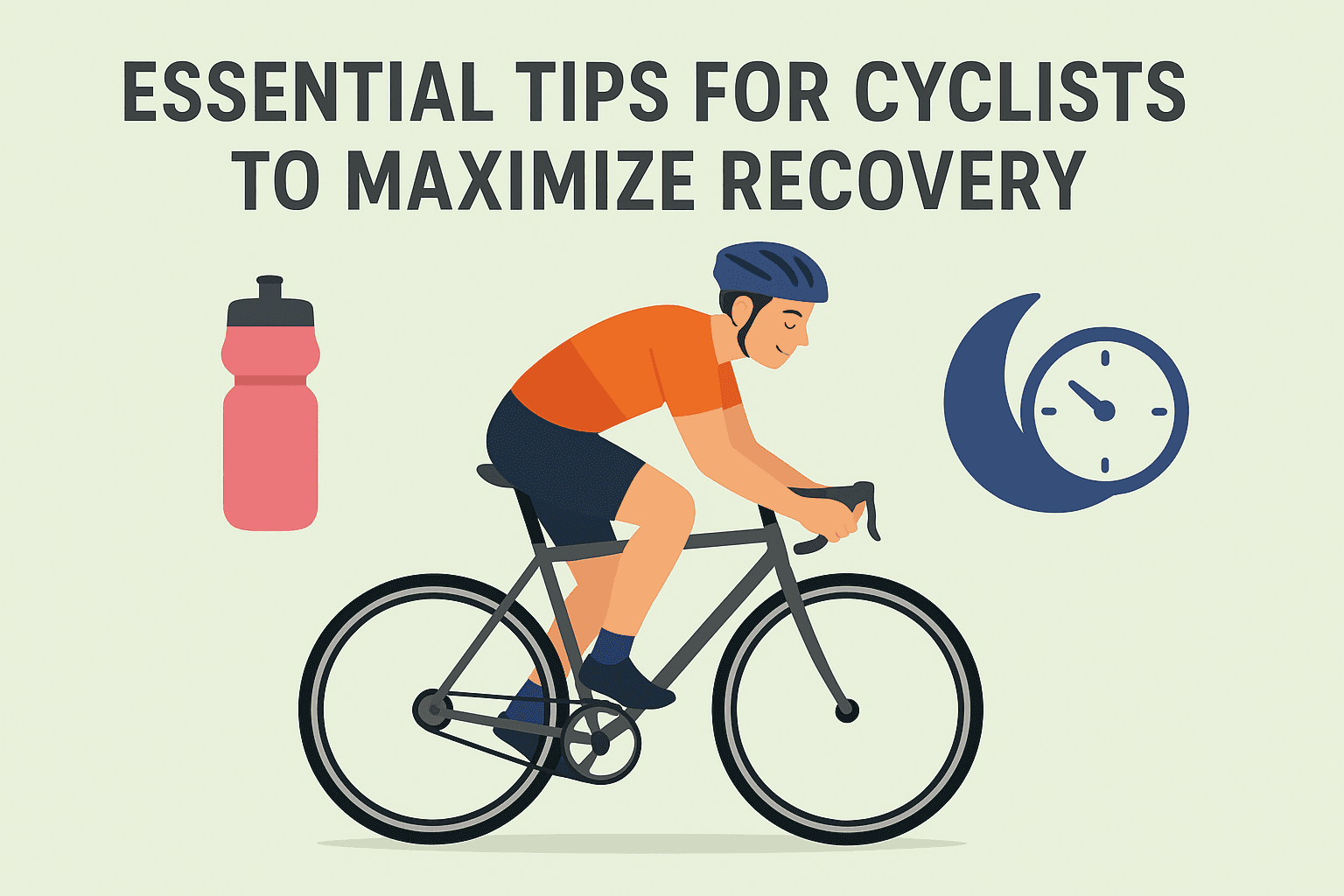
Most cyclists love the thrill of training: the burning lungs on a climb, the heart-pounding effort of an interval session, or the pure speed of a sprint. But ask any seasoned pro what really makes you faster, and they’ll tell you this: it’s not just the training — it’s the recovery.
Yes, recovery might not look as exciting on Strava as a KOM attempt or a 100 km group ride, but it’s the hidden weapon that separates good riders from great ones. If training is the stress that tears you down, recovery is the glue that builds you back stronger.
Think of your body like a construction site. Training knocks down old walls and stresses the foundation. Recovery is the rebuilding phase — that’s when your body lays stronger bricks, installs better wiring, and prepares the house to withstand bigger storms in the future. Skip recovery, and you’re essentially building on weak foundations.
Let’s dive deep into the 11 essential tips for cyclists to maximize recovery — with practical notes and detailed explanations so you can understand why each step matters.
🛑 Why Recovery Matters
Many cyclists believe “more training = more progress.” That’s not always true. In fact, fitness gains don’t happen during the ride itself. When you’re riding, you’re breaking down muscle fibers, depleting energy stores, and stressing your cardiovascular system.
The actual improvement happens afterward, during rest and repair. Your body:
-
Rebuilds damaged muscle fibers (making them stronger).
-
Replenishes glycogen stores (fuel for your next ride).
-
Strengthens bones, tendons, and ligaments.
-
Improves cardiovascular efficiency.
If you don’t allow for proper recovery, your body never fully repairs. The result? Fatigue, plateau, or worse — injury.
🧱 The Foundation: Rest and Smart Planning
1. Make Rest Days Non-Negotiable
It sounds simple, but too many cyclists ignore it. At least one complete rest day per week should be part of your schedule.
-
Rest day ≠ recovery ride. It means no riding, no gym, no cross-training.
-
Think of it as pressing the reset button. Your muscles, joints, and even nervous system get the downtime they need.
📌 Note: Feeling guilty about rest days is common. Many cyclists worry they’re “losing fitness.” But here’s the truth: a proper rest day will make you fitter, faster, and fresher for your next ride.
2. Plan Recovery Weeks
Your body can’t handle constant stress. That’s why every 3–6 weeks, schedule a recovery week where both intensity and volume drop by 40–50%.
-
Example: If you usually ride 200 km per week, scale down to 100–120 km with mostly easy spins.
-
This “deload” phase is when training adaptations lock in — fitness consolidates, fatigue drops, and motivation resets.
📌 Note: Professional cyclists live by this cycle. Even Tour de France riders have carefully planned recovery strategies to avoid overtraining.
3. Listen to Your Body’s Signals
No training plan can perfectly predict your body’s needs. That’s why learning to listen to feedback is a superpower.
Warning signs you need more recovery:
-
Elevated morning heart rate (check with a simple pulse test).
-
Persistent fatigue, even after easy rides.
-
Mood changes (irritability, low motivation).
-
Declining performance despite training harder.
📌 Note: Ignoring these red flags is how cyclists fall into overtraining syndrome — a condition that can take months to recover from. Adjust early, and you’ll avoid long-term setbacks.
😴 Sleep and Strategic Movement
4. Prioritize Quality Sleep
You can eat well, use fancy supplements, and invest in recovery tools, but nothing replaces sleep.
-
Aim for 7–9 hours per night.
-
Deep sleep is when your body releases growth hormone, repairs muscles, and boosts immune defense.
-
Stick to a consistent sleep schedule — your body loves routine.
📌 Note: Many pros guard their sleep like a secret weapon. Some even use blackout curtains, cool rooms, and pre-bed routines (no screens, reading instead) to maximize recovery.
5. Master the Recovery Ride
Many riders misuse recovery rides — they go too hard. A true recovery ride should feel almost laughably easy.
📌 Note: Think of recovery rides as blood circulation sessions. They help flush waste products, keep legs loose, and maintain routine — but don’t add stress.
🍎 Fueling Your Recovery
6. Focus on Nutrition
Training is only half the equation; fuelling recovery is just as critical.
-
Carbs: Refill glycogen stores. (Rice, oats, potatoes, fruits).
-
Protein: Repair and rebuild muscles. (Eggs, chicken, fish, beans).
-
Healthy fats: Support hormones and long-term energy. (Nuts, olive oil, avocado).
-
Micronutrients: Vitamins and minerals from veggies support immune function.
📌 Note: Recovery is not the time for extreme dieting. Severe calorie restriction after hard rides slows recovery and risks injury.
7. Stay Hydrated
Dehydration lingers long after the ride ends.
-
Daily goal: Half your body weight (lbs) in ounces of water. Example: 70 kg rider = ~2.5–3 litters/day.
-
After long rides, add electrolytes (sodium, potassium, magnesium) to replace what you sweat out.
📌 Note: A simple hydration check is urine colour — pale yellow = hydrated, dark = drink more.
8. Time Your Post-Ride Nutrition
The first 30 minutes after a ride are golden. Your muscles are primed to absorb fuel.
-
Ideal ratio: 3:1 carbs to protein.
-
Quick options: Banana + yogurt, chocolate milk, rice with eggs, or a recovery shake.
📌 Note: If you wait too long, recovery slows down. Always try to refuel as soon as possible.
9. Use Recovery Drinks Strategically
Commercial recovery shakes can be convenient, especially if you’re training hard or riding away from home.
-
Use them when you can’t access real food quickly.
-
But if you’re home and can eat a balanced meal within an hour, skip the powder and go natural.
📌 Note: Don’t fall for marketing hype. Recovery drinks are tools, not miracles.
🧘 Physical Recovery Tools
10. Stretch it Out
Cycling is repetitive and can tighten muscles. Stretching restores flexibility.
-
After rides: focus on hip flexors, hamstrings, calves, lower back.
-
Pre-ride: use dynamic stretching (leg swings, gentle lunges).
-
Post-ride: use static stretches (hold 20–30 seconds).
📌 Note: Even 5–10 minutes after a ride can prevent long-term stiffness and imbalances.
11. Consider Recovery Tools
You don’t need expensive gadgets, but they can help:
-
Foam rollers: Massage tight spots and improve blood flow.
-
Compression boots or sleeves: Reduce swelling, promote circulation.
-
Massage guns: Break up knots if used gently.
📌 Note: Tools are supplementary. They help, but nothing replaces rest, sleep, and good nutrition.
💡 Bonus Recovery Tips (Going Beyond the Basics)
-
Active recovery days: Walking, yoga, or gentle swimming keep you moving without stressing muscles.
-
Mental recovery: Stress drains energy too. Meditation or mindfulness can be just as important as stretching.
-
Consistency over extremes: A balanced approach to training and recovery always beats a boom-and-bust cycle.
🚴 So, Remember
Recovery isn’t just “not training.” It’s an active, intentional process that deserves as much attention as your toughest intervals.
The best cyclists aren’t always the ones who train the hardest. They’re the ones who rest the smartest.
So, make your rest days sacred, sleep like a champion, fuel like it matters, and treat recovery as training’s equal partner.
That’s the real secret to becoming faster, stronger, and healthier — both on and off the bike.