Welcome to BSME2E
Live
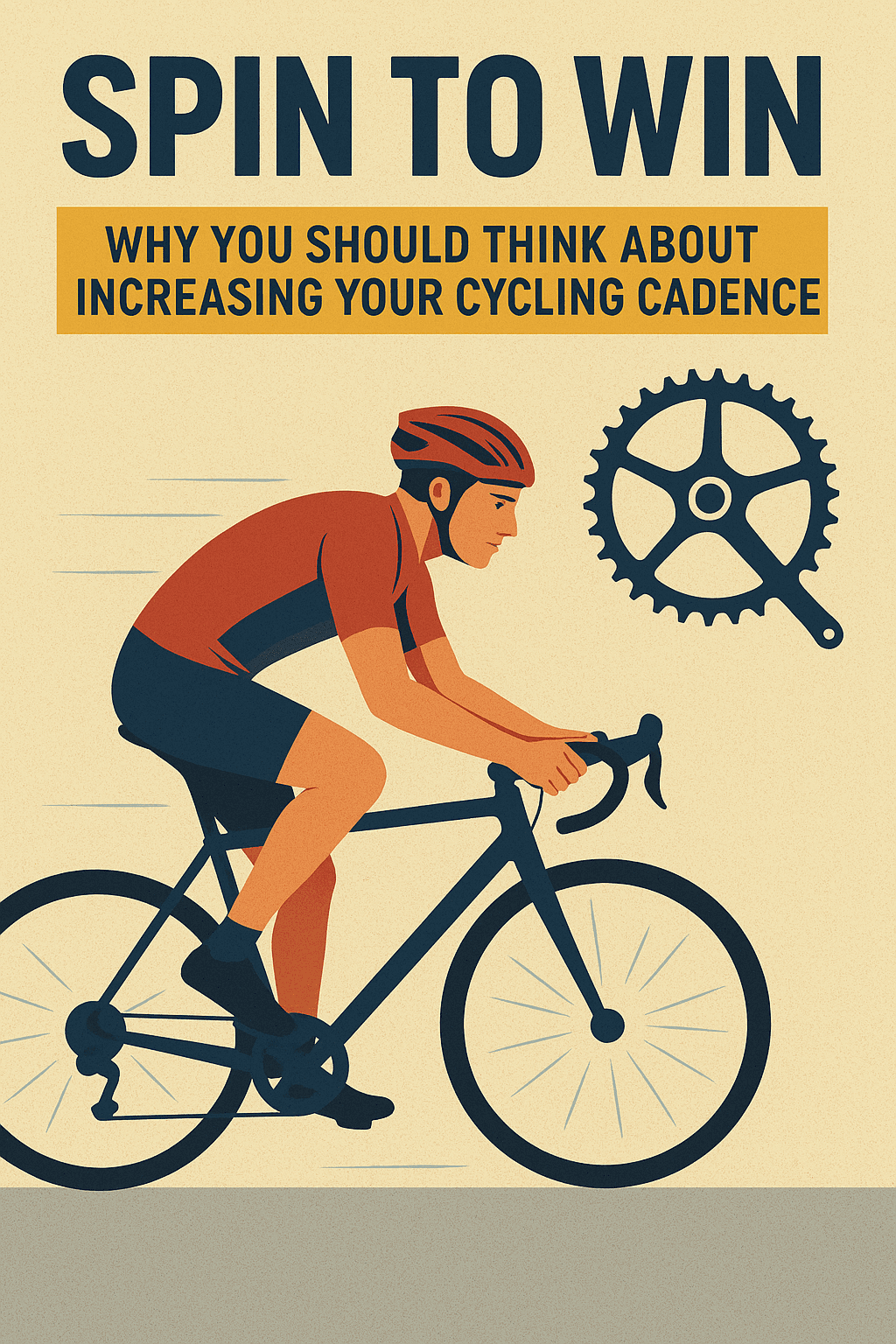
If you’ve been cycling for a while and find yourself grinding the pedals in a big gear, pushing hard but feeling drained quickly, you’re not alone. Many beginners—and even some seasoned riders—mistakenly think that cycling harder automatically means cycling better.
But here’s the truth: that heavy, slow, muscle-crunching pedal stroke might look powerful, yet it could be holding you back. One of the most underrated skills in cycling is mastering cadence—the speed at which you turn the pedals.
Let’s take a deep dive into what cadence really is, why it matters, and how small tweaks can completely transform your riding experience.
Cadence is simply the number of times your pedals make a complete revolution per minute (RPM). Think of it like the rhythm of your ride.
A low cadence means you’re pushing harder on each pedal stroke, usually in a bigger gear (like driving a car in 2nd gear up a hill).
A high cadence means you’re spinning the pedals faster in an easier gear, distributing the work across more pedal strokes (like cruising in 5th gear on the highway).
🔑 Sweet Spot for Most Riders:
On flat terrain, the optimal cadence usually falls between 80–95 RPM. Professional cyclists often hover around this range, sometimes pushing well over 100 RPM during sprints or fast efforts.
💡 Note: There’s no one “perfect” cadence. Every cyclist’s body has a freely chosen cadence (FCC)—a natural rhythm where efficiency feels best. For most people, this is between 80–100 RPM.
Cadence is like shifting gears in a car. Sure, you can drive around in a low gear, revving the engine and working it hard, but you’ll waste energy and wear things out faster. Your legs are no different.
Here’s why working on cadence can be a total game-changer:
Less muscular fatigue → Each pedal stroke requires less brute force.
Better endurance → Your cardiovascular system (heart + lungs) carries more of the load instead of your leg muscles burning out.
Reduced knee strain → Low cadence grinding puts enormous stress on the joints. Spinning distributes the effort more evenly.
Improved efficiency → You’ll maintain steadier power over long rides.
More responsive → Higher cadence allows you to adapt quickly to speed changes, terrain shifts, or attacks in group rides.
Think of it this way: taking lots of smaller steps (high cadence) is usually easier than taking a few giant leaps (low cadence).
That doesn’t mean you should always spin like a washing machine. Sometimes, grinding at a lower cadence (60–70 RPM) is beneficial:
Climbing steep hills → A bigger gear with more force per stroke can keep momentum steady.
Strength training on the bike → Riding at low cadence mimics gym work for your legs.
Time trials or flat-out efforts → Some cyclists find they naturally perform better at slightly lower cadences, especially if they’re strong in the legs.
🚫 But beware of going below 60 RPM for long periods—it overloads your knees and can lead to injury.
Here’s where it gets interesting:
Studies show that higher cadence (90+ RPM) actually requires more oxygen and burns more energy than grinding at 60 RPM. Sounds counterproductive, right?
But here’s the trick: even though your cardiovascular system is working harder, your muscles last longer. Muscular fatigue is usually the limiting factor in cycling, not oxygen uptake.
Translation: spinning faster makes you tired in a different way—but one that’s easier to recover from and better for long-distance riding.
If you’re used to grinding, suddenly jumping to 90 RPM will feel chaotic, almost like your legs are running away from you. That’s normal. Cadence training is a skill, and like any skill, it takes practice.
Here’s a roadmap to help:
Shift down to a smaller gear.
Focus on smooth, circular pedal strokes, not just mashing down.
Relax your upper body—avoid bouncing or gripping the bars too tightly.
Spin-Ups: During your ride, spend 30–60 seconds pedalling at 100+ RPM. Rest. Repeat 3–5 times.
Cadence Ladders: Start at your normal cadence. Every 2 minutes, increase by 5 RPM until you hit 100+.
Practice maintaining 85–90 RPM on flat roads.
Gradually extend how long you can hold it without bouncing.
Use a bike computer or cadence sensor to track progress.
Your optimal cadence isn’t fixed—it depends on the road, your bike, and your goals. Here’s a breakdown:
Flat Roads: 85–95 RPM for smooth, efficient cruising.
Climbing: 70–85 RPM—slightly lower but still spinning, not grinding.
Sprinting: 100+ RPM—explosive, all-out effort.
Recovery Rides: Whatever feels natural, usually 80–90 RPM.
Bouncing in the Saddle
Usually from tension or lack of control.
Solution: Relax your core, focus on smooth pedal circles, not stomping.
Feeling Out of Breath
Higher cadence = more cardiovascular demand.
Solution: Build gradually. Let your lungs adapt over weeks.
Knee Discomfort
Happens when cadence is too low (grinding).
Solution: Shift down earlier and spin instead of forcing the gear.
Increasing your cadence isn’t about chasing one magic number—it’s about building flexibility and range. The goal is to develop the ability to spin at different cadences comfortably so you can adapt to any road or race situation.
Higher cadence = less strain on muscles, better endurance.
Lower cadence = strength training and short bursts of power.
Your natural “sweet spot” will emerge over time—but aim to expand it.
💬 Remember this: Cycling is about working smarter, not just harder. Learning to spin more efficiently can save your legs, improve your endurance, and make cycling feel smoother and more enjoyable.
And most importantly—only spin faster if you enjoy it. Cadence is personal. Experiment, explore, and find what makes your ride feel best. After all, cycling should always be fun.