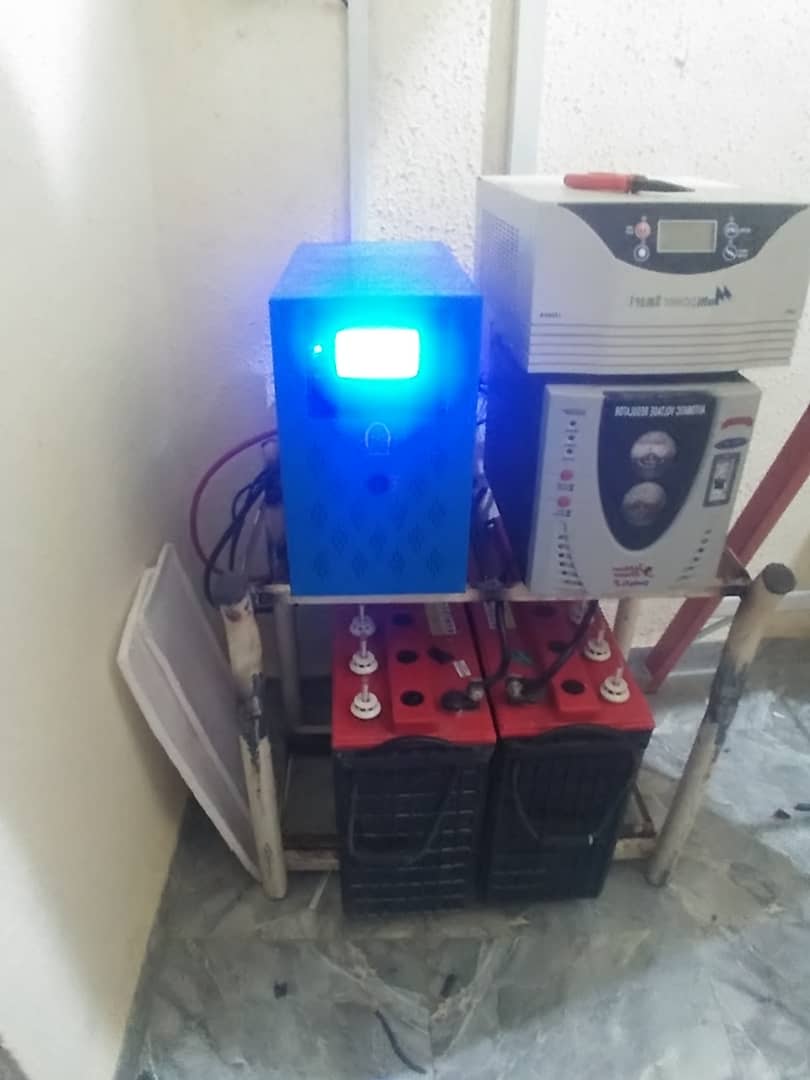
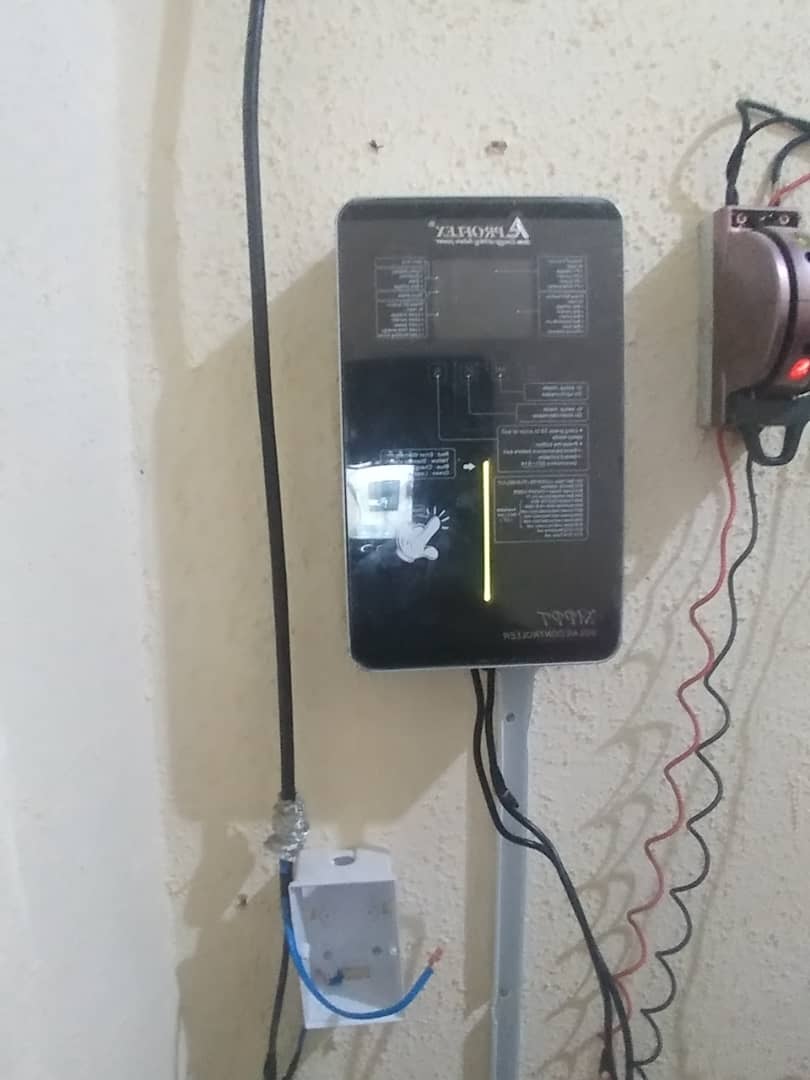
2 KVA INVERTER SYSTEM WITH 240 AH BATTERY
- 2 KVA INVERTER SYSTEM WITH 240 AH BATTERY

A 2 kVA inverter can support household loads up to
its rated capacity, subject to its actual wattage rating and surge limits. For
a 12 V, 240 Ah battery, the nominal stored energy is:
240 Ah × 12 V = 2,880 Wh (2.88 kWh)
If the inverter supplies 1,600 W for 5 hours, the
load would use:
1,600 W × 5 hours = 8,000 Wh (8 kWh)
That is more energy than one 12 V, 240 Ah battery
can provide. In practice, usable battery energy is lower than its nominal
capacity because of inverter losses and battery discharge limits. The
battery-bank voltage and configuration must also match the inverter.
Approximate solar-panel sizing
Assuming 5 peak-sun hours per day, 150 W panels, and
ideal conditions:
1,600 W × 5 hours ÷ 5 sun hours = 1,600 W of solar
panels
That equals about 11 × 150 W panels before allowing
for system losses. A practical array would need additional capacity, and the
charge controller must be compatible with the inverter’s battery voltage and
the panels’ configuration.
The actual panel requirement depends on your daily
energy use, battery voltage and type, desired backup time, local sunlight, and
charging losses. A 2 kVA inverter rating alone does not determine how many
panels you need.
Indicative costs for a 2 kVA inverter system in
Nigeria
Costs vary by city, brand, battery type, and
installation quality. The figures below are rough planning ranges in naira, not
live supplier quotations.
Component
Typical specification
Indicative cost
Inverter
2 kVA, 12 V pure sine wave
₦250,000–₦500,000
Battery
12 V, 240 Ah deep-cycle lead-acid
₦450,000–₦750,000
Battery alternative
12.8 V, roughly 200–240 Ah LiFePO₄,
with suitable BMS
₦1,200,000–₦2,200,000
Solar panels
11 × 150 W (1.65 kW total)
₦550,000–₦900,000
Solar charge controller
MPPT, sized for array and battery voltage
₦180,000–₦400,000
Mounting structure
Roof or ground mount
₦120,000–₦300,000
Protection and wiring
Breakers, fuses, isolators, cables, earthing,
connectors
₦150,000–₦350,000
Installation and commissioning
Depends on site and cable runs
₦150,000–₦350,000
Approximate system totals
With lead-acid battery: about ₦1.85 million–₦3.55
million
With lithium battery: about ₦2.6 million–₦5 million
These estimates assume a 12 V inverter and battery
system. Confirm the inverter’s DC input voltage before purchasing: a 2 kVA
inverter may be designed for 12 V, 24 V, or 48 V, and the battery bank must
match it. A 240 Ah battery at 24 V or 48 V stores substantially more energy
than one at 12 V, so the system cost and configuration would differ.
Important sizing and running-cost considerations
The earlier estimate of 11 × 150 W panels is only a
rough starting point for a 1,600 W load running five hours daily. It does not
adequately account for cloudy weather, heat, dust, panel orientation, inverter
losses, or battery-charging losses. Also, one 12 V, 240 Ah battery cannot
reliably supply 1,600 W for five hours; its nominal energy is only 2.88 kWh,
and usable energy is lower.
For a reliable design, size the system from the
appliances’ actual daily energy use and required backup time. A qualified
installer should verify panel-string voltage, controller capacity, inverter voltage,
battery discharge limits, cable sizes, and protection devices. Prices can
change quickly, so obtain current written quotations and confirm whether VAT,
delivery, mounting, and warranties are included.