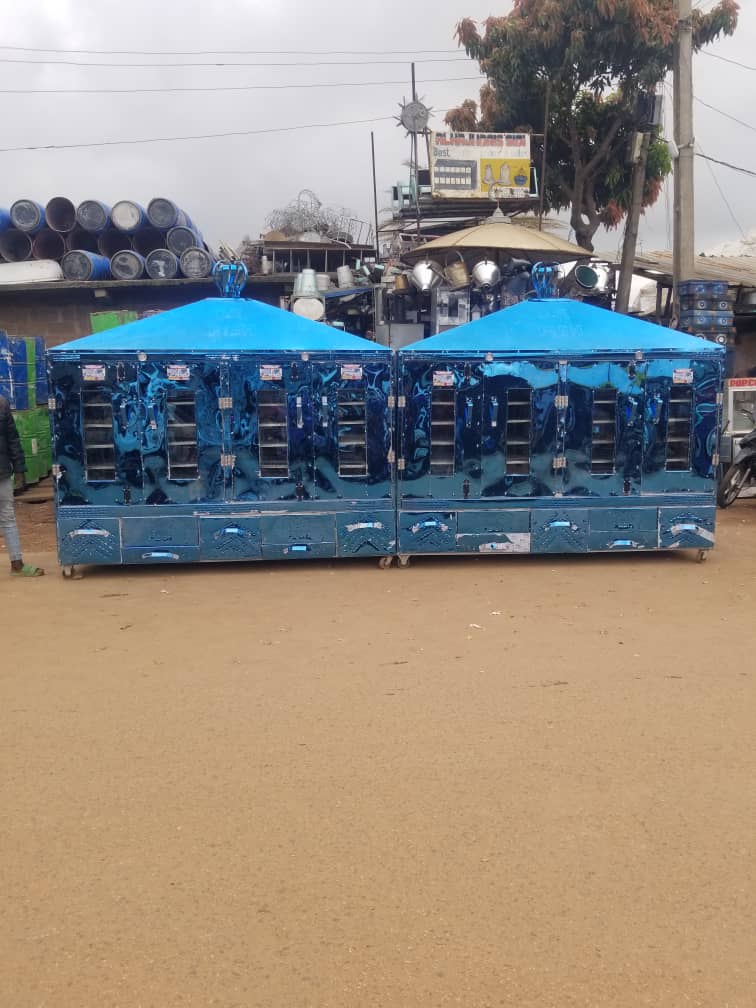
BUDGET FOR DESIGN AND CONSTRUCTION OF A 500-TABLE-SIZED CATFISH DRYER
PROPOSAL FOR THE DESIGN AND FABRICATION OF A 500-CAPACITY FISH DRYER FEATURING ELECTRIC/GAS AND CHARCOAL HEATER SYSTEMS IN NIGERIA
Topic
Design and Fabrication of a 500-Capacity Fish Dryer Featuring Gas and Charcoal Heater Systems for the Nigerian Market
Executive Summary
• This outlines the design and fabrication of a versatile fish dryer with a capacity of 500 fish, featuring gas and charcoal heater systems. This aims to enhance fish preservation methods in Nigeria, catering to various energy availability scenarios. The fish dryer will be designed to provide an efficient, cost – effective, and solution for fish drying, crucial for extending shelf life and reducing post – harvest losses. The design/construction phase is expected to be completed within 1month, with an estimated budget of N2, 300,000.00
Introduction
• Fish is a major source of protein for many Nigerians, but post–harvest losses due to inadequate preservation methods remain a significant challenge. Traditional fish drying techniques are often inefficient and dependent on weather conditions. Developing a modern, multi-fuel fish dryer will provide a reliable solution for preserving fish, ensuring food security, and improving the livelihood of fish farmers and traders.
Statement of the problem/Justification
• The current methods of fish drying in Nigeria are largely inefficient and heavily dependent on weather conditions, leading to significant post–harvest losses. These methods also pose health risks due to potential contamination. A fish dryer that can operate on electric, gas, and charcoal heater systems will offer flexibility, ensuring consistent drying irrespective of energy availability or weather conditions. This innovation will help reduce post–harvest losses, enhance food security, and increase the income of fish farmers and traders.
Objectives
1. Design: Create a comprehensive design for a 250-capacity fish dryer that incorporates electric, gas, and charcoal heating systems.
2. Fabrication: Build a prototype on the design using locally available materials.
3. Testing: Evaluate the efficiency of the improved dryer under different operating conditions.
4. Optimization: Refine the design to improve performance, reduce cost, and enhance user-friendliness.
5. Implementation: Prepare the fish dryer for mass production and market introduction in Nigeria.
Methodology
1. Research and Design (Week 1)
– Conduct a review of existing fish drying technologies and market needs in Nigeria.
– Develop a conceptual design and technical specifications tailored to Nigerian conditions.
– Use CAD software to create detailed engineering drawings.
2. Materials Selection and Procurement (week 2)
– Identify suitable materials for construction based on durability, cost, and availability in Nigeria.
– Source and procure necessary materials and components locally.
3. Fabrication (week 3)
– Construct the frame and structural components.
– Assemble mechanical, electrical, and gas/charcoal heating components.
– Ensure all parts are properly aligned and functioning.
4. Testing and optimization (week 3)
– Conduct initial test to assess performance under various conditions.
– Gather data on efficiency, speed, and reliability.
– Make necessary adjustments to improve performance.
5. Final Testing and Documentation (Week 4)
– Perform rigorous testing to ensure the fish dryer meets all specifications.
– Document the design, construction process, and performance results.
6. Implementation and Training (Week 5)
– Develop user manuals and maintenance guides in English and local languages.
– Train potential users on operation and maintenance of the fish dryer.
Reference
– J. Doe, “Modern Fish Drying Techniques,” Journal of Food Processing Engineering, vol. 47, no. 2, pp. 89-102, 2021.
– A. Smith, “Innovations in Food Preservation Technologies,” International Journal of Food Science and Technology, vol. 30, no. 1, pp. 45-56, 2020.
– M. Brown, “Sustainable Agriculture Practices in Nigeria,” AgriTech Publications, 2019.
– Nigerian Institute of Marine Research and Development (NIMRD), “Fish Preservation Methods in Nigeria, 2022.
Costing
1. Design and Model Specification: N200,000.00
2. Material Procurement: N1,650,000.00
3. Fabrication: N250,000.00
4. Testing and Optimization: N100,000.00
5. Documentation and Training: N100,000.00
Total Estimated Cost: N2, 300,000.00
TASK DURATION (WEEKS)
1 Research and Design 1
2 Materials selection and procurement 2
3 Fabrication 2 – 3
4 Testing and optimization 3
5 Final Testing and Documentation 4
6 Implementation and Training 4
• The timeline ensures that the project stays on track and is completed within 1 month. Each phase will be monitored closely to ensure adherence to the budget and timeline.
Review and Adaptation for Nigerian Context
1. Local Market Needs and Conditions: The design and functionality of the fish dryer should take into account the specific types of fish commonly processed in Nigeria and typical drying conditions.
2. Local Material Sourcing: Emphasis on using locally available materials will not only reduce cost but also support local business and ensure easier maintenance and part replacement.
3. Cultural Consideration: The training and user manual should be made available in English and major local languages (e.g., Yoruba, Hausa, Igbo) to improve accessibility.
Terms and Conditions for engagement of service
i. An initial down payment of 70% of the total cost for design and fabrication using galvanized steel finishing. Subsequent remittance of the balance of 30%is to be disbursed after 70% of the work has been completed.
ii. The construction phase to completion and delivery phase will take 3 months, due to irregular power supply across the state in recent times.
iii. The estimated total cost will change within one month after submitting the proposal as a result of periodic inflation of the naira, causing an increase in the cost of material procurement.
Thank you for your perusal and subsequent response as we await your approval to commence the construction process and subsequent delivery according to specifications.
Best regards,
Mr. David Assomull
Production Manager