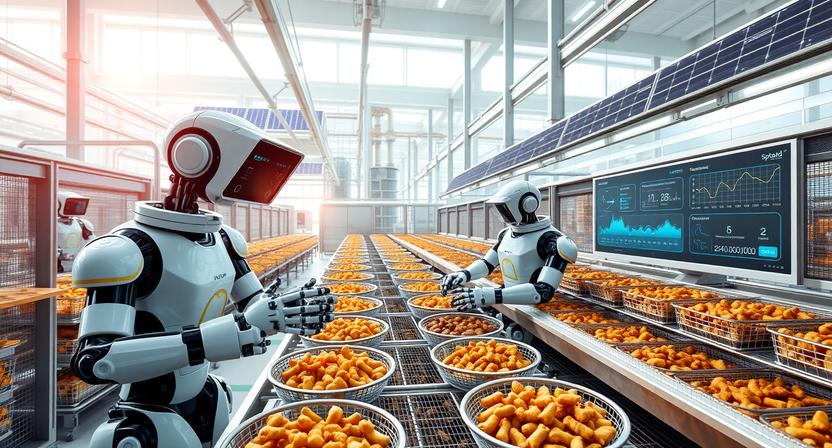
AI-Driven
Sustainable Food Processing System: Detailed Proposal
1. Project
Overview
Objective:
To develop an intelligent, automated system that optimizes solar drying and
hydrating processes for fish, meat, and other perishable foods. The system aims
to improve product quality, reduce energy consumption, enable predictive
maintenance, and support sustainable community food processing efforts.
Scope:
The project integrates IoT sensors, machine learning models, computer vision,
and a user interface to create a comprehensive smart processing platform.
2. Project
Goals & Benefits
|
Goal
|
Benefit
|
|
Optimize drying/hydrating parameters
|
Higher quality, consistent products
|
|
Predict equipment failures
|
Reduced downtime, maintenance cost savings
|
|
Automate quality inspection
|
Faster, unbiased quality control
|
|
Minimize energy use
|
Lower operational costs and environmental impact
|
|
Enable real-time monitoring
|
Better decision-making and responsiveness
|
3. Technical
Components
A. Hardware
Deployment
·
IoT sensors to monitor:
·
Temperature
·
Humidity
·
Solar irradiance
·
Fuel levels
·
Machine vibrations and performance metrics
·
Cameras for visual inspection of
processed products
B. Software
& AI Modules
·
Data Acquisition &
Storage: Cloud or local servers to collect and store sensor data.
·
Process Optimization Model: Machine
learning algorithms (e.g., regression, reinforcement learning) to determine
optimal drying/hydrating conditions.
·
Predictive Maintenance
Model: Time-series analysis (e.g., LSTM networks) to forecast component
failures.
·
Computer Vision
Inspection: CNN-based models to assess product quality and detect defects.
·
Energy Management System: AI models
to optimize solar and fuel usage based on environmental forecasts.
C. User
Interface
·
Dashboard displaying real-time data,
alerts, and recommendations.
·
Mobile app for remote monitoring and
control.
·
Reporting tools for process analytics
and maintenance schedules.
4. Implementation
Roadmap
|
Phase
|
Activities
|
Timeline
|
Deliverables
|
|
Phase 1: Planning & Design
|
Stakeholder consultations, sensor selection,
system architecture design
|
Month 1-2
|
Project plan, system schematic
|
|
2: Hardware Setup Phase
|
Deploy sensors, cameras, and control units on
equipment
|
Month 3-4
|
Installed IoT infrastructure
|
|
Phase 3: Data Collection & Model Training
|
Collect initial data, develop and train machine
learning models
|
Month 5-6
|
Trained models, validation reports
|
|
Phase 4: Integration & Testing
|
Integrate AI modules with control systems, conduct
pilot testing
|
Month 7-8
|
Prototype system, testing results
|
|
Phase 5: Deployment & Training
|
Deploy full system, train local operators
|
Month 9
|
Operational system, user manuals
|
|
Phase 6: Monitoring & Optimization
|
Continuous improvement based on feedback
|
Ongoing
|
System updates, performance reports
|
5. Budget
& Resources
|
Item
|
Estimated
Cost
|
Notes
|
|
Hardware (Sensors, Cameras)
|
$10,000 – $15,000
|
Depending on scale
|
|
Cloud Storage & Computing
|
$5,000/year
|
Data processing & storage
|
|
Software Development
|
$20,000
|
Custom AI models & UI
|
|
Training & Support
|
$5,000
|
Operator training & ongoing support
|
|
Contingency
|
$5,000
|
Unexpected expenses
|
Total
Estimated Budget: ~$45,000 – $55,000