DETAILED
INFORMATION ON ORGANIZATION
ABOUT JESSY JAY INTERNATIONAL
LIMITED
INTRODUCTION
- JESSY JAY
International Limited is a limited liability Company specialized in
design, planning and executions to complete management of all types of
projects and engineering services. We are into transportation and supply
of plants and equipment, agro-allied services, oil and gas services and
general contractors.
- The company has the reputation for efficiency and fast
delivery of services to our numerous clients. Our standards which we have
worked hard to maintain, has given us recognition and general acceptance.
- The company has a high selection criterion for
outsourcing on its diversity, seeking well qualified and experienced
professionals in their various fields of human endeavors; who form a solid
team for effective supply/services and project engagements who deliver on
target objectives desired by our esteemed clients.
- Our capacity and capability to execute classes of
projects is not limited to road construction, civil engineering works,
mechanical engineering works, electrical engineering works, building,
structural engineering designs and construction, project management,
general maintenance, transportation of heavy equipments and other
logistics, and general supplies.
- JESSY JAY
International Limited offers a wide range of engineering construction
services. The project team maintains a strong foundation built on trust
generated through a positive and mutual relationship with clients, other
firms, professional consults, sub-contractors and suppliers. We adopt a
company policy that encourages shared performance and responsibility,
ensuring remarkable degree of professional service being result oriented
on all projects undertaken.
- The company is duly registered by the Corporate Affairs
Commission (CAC) of the Federal republic of Nigeria Jessy Jay
International Limited with RC number 445037 on 18th day of
March, 2002.
COMPANY HISTORY
- Since, its founding, the company has experienced and
steady growth, with today’s annual building volume reaching over $9million
and a work force of over 15 employees. The company is also ranked in ENG’s
most recent listing of “Top 400 Contractors.”
- The project team at Jessy Jay International Limited
thrives on challenging projects of unique character, offering a full range
of preconstruction, construction and procurement services. With its proven
track record and dedication to excellence, Matt Construction supports
every project from large, complex projects to smaller scale buildings –
with outstanding leadership and commitment, building upon its reputation
as one of the best, most dynamic and versatile engineering and procurement
service contractors.
OUR VISION
- The vision of the company is to reach a global
state-of- the art in her modus operandi on delivering the objectives of
any project we undertake or service rendered, so that clients, end
beneficiaries and the society at large continue to enjoy the need for
meeting specified standards and drive satisfaction by what we offer.
“Thus affording our clients the
luxury of satisfaction and economic gains”
“EXCELLENCE AND CLIENT
SATISFACTION” IS OUR GOAL
OUR MISSION
- Responding to customer needs at a level way above what
is commonly obtainable in the industry. To provide rapid development
without compromising quality and standards, thus provide the desired
satisfaction by our clients.
OBJECTIVES OF THE COMPANY
JESSY JAY INTERNATIONAL LIMITED was established to promote wide objectives in line with
rapid economic development of this country, which are:
- To secure wider Nigerian participation in various
fields in accordance to our national economic policies
- To secure a wider range of Nigerian in printing works
to enhance the production of material of our local consumption
- To establish comprehensive engineering capabilities to
undertake major developmental projects for which multi-disciplinary
services are required
- To develop Nigerian professional expertise to
international standard
- To create opportunities for gainful training, skill
acquisition and employment
SERVICES PROVIDED
The services provided by JESSY
JAY INTERNATIONAL LIMITED are comprehensive and include;
- ICT Equipment /Accessories and Software installations
and ICT training
- Water resources development and water supply projects
- Agriculture and farm development projects/Training
- MSME Business development strategies/Training
- Alteration and Renovation
- General supply of industrial and factory machines,
industrial equipment, office equipment and furniture, laboratory
equipment, and stationery
- Consultancy services
OUR EQUIPMENT
- Excavator
- Pick up van
- Water tanker
- Photocopying machine
- Tipper
- Mixer
- Vibration
- Drilling machine
- Block Molding machine
JESSY JAY INTERNATIONAL LIMITED has considerate experience in all the relevant discipline
which would help ensure success of any given assignment.
COMPANY BIOGRAPHY
- The greatest asset of Jessy Jay International Limited
is its team of experienced and highly quality staff. Our professionals are
renowned experts in various fields of engineering, procurement and
Distribution services.
·
Mrs. Jessica Dasplang is the
chairman of Jessy Jay International Limited. Her years of experience in the
field of civil engineering and supplies as well as her great leadership ability
made it possible for her to assemble the team of experienced professionals that
built up this great company.
STAFF NAME CV
1. Ms. Jessica Dasplang: CEO/ MD
2. Gen. Steven Gu’ar: Board
Member
3. Mr. David T. O. Assomull: Board
Member
4. Mr. Joseph James Shemma: Board
Member
5. Mr. Chibuzo Okafor: Programme
Manager
6. Mr. Chekwube Ejisi: Information
and Research
7. Mrs. Zeruya Da’ur: Admin.
Assistant
Secretary: Sekyen Danladi, Receptionist /PR: Uchendu C.
Stephanie, Account Department: Mrs. Hope Ogbu, Legal adviser:
Bar. Samci S. D (ESQ) – Vindication Chambers, Civil Engineer: Lucky
Johnson, Electrical engineer: Musa Suleiman, Drawing man/Qus &
Headman of the field in various Capacities: Mohammed Bamidu, Company
representative: Kehinde Oni, Clerk: Planshak Daffi.
PROJECTS
Jessy Jay international Limited has
gained wealth of experiences through active participation in rendering total
quality engineering services to the various sectors and industries. Giving our
inexhaustible services carried out by us:
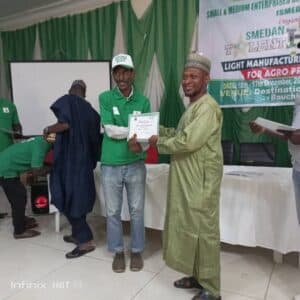
- Agro – processors engagements and training sessions in
partnership with SMEDAN 2022, 2023, and 2024.
- Design and construction of science laboratory block at
Baptist Model School Iluju, Oyo state.
- Construction of primary School UBE project at Oko
Ogbomosho South Oyo state
- Construction 2 units, 2 bedrooms Bungalow at New Todo
Road Illorin Kwara state.
- Rehabilitation of Kainji General Manger office Road, at
Kainji Power station, New Bussa.
- Re-liabilities and modification of Kainji Power
Station, General Mangers guest House New Bussa.
- Electrification and installation of transformers for
central Hospital at Ekpoma Edo state.
- Rehabilitation of No. 1 Block of Eight man rank and
file quarters at Shiroro, Niger State.
- Supply of concrete drilling machine with M10-M20
drilling bits at Jebba NEPA generating station.
- Supply of Furniture and Office equipment to ITF Area
Office, Yola.
- Supply of Computer and accessories to ITF Area of
Miango ROAD, Jos and ITF Center for Excellence, Bukuru, Jos.
Who Are Our Clients?
1. Primary Beneficiaries
·
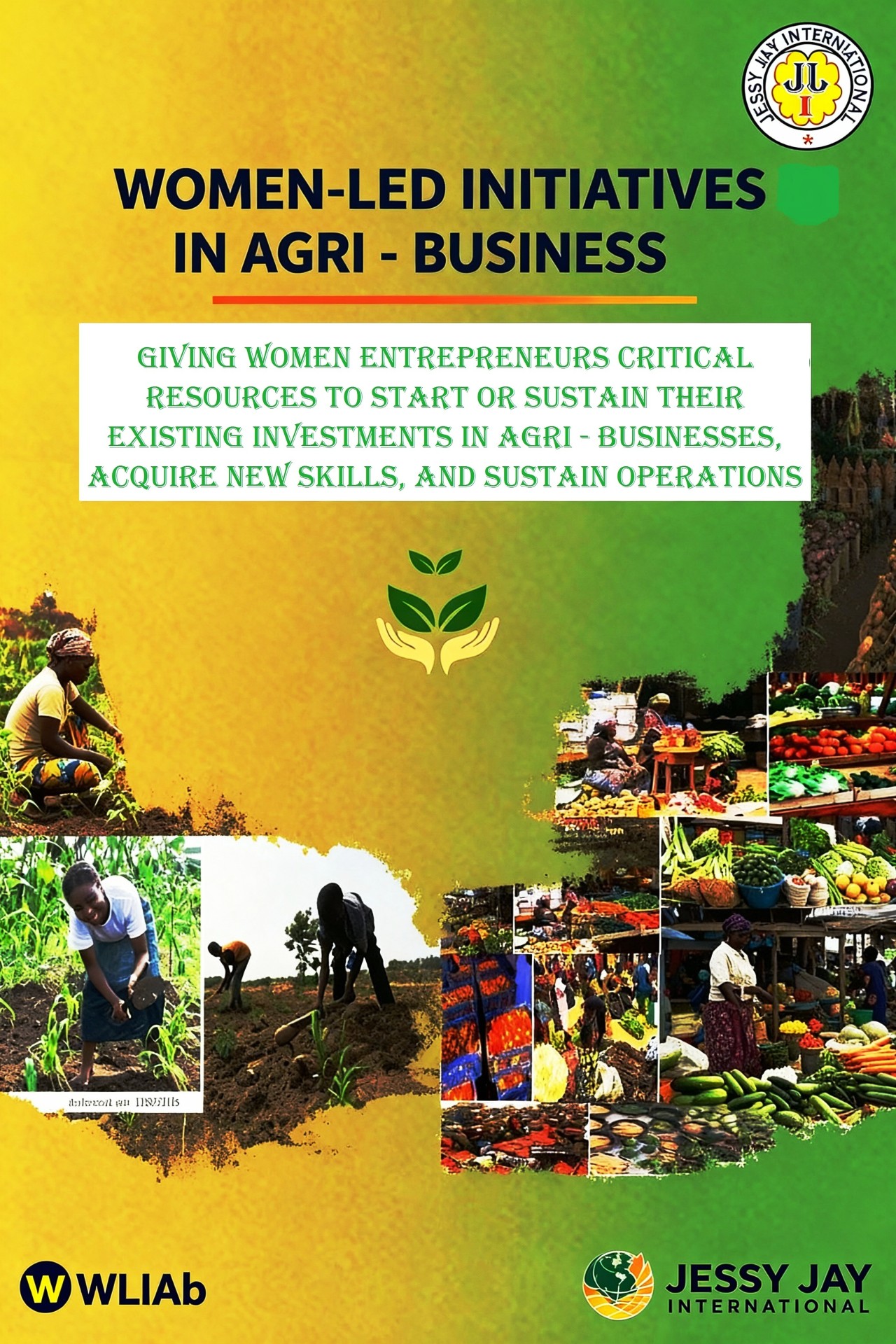
Women farmers and marketers of
highly perishable farm produce (fish, meat, tubers, fruits, vegetables)
·
Estimated direct
beneficiaries: 200 women across five Nigerian states
·
Indirect beneficiaries: Family
members (average of 5 per beneficiary, totaling approximately 1,000
people)
2. Community and Local Stakeholders
·
Smallholder farmers & grassroots
entrepreneurs
·
Local cooperatives and women’s
groups forming sub-clusters of 20 women each
·
Community leaders and local
government authorities supporting sustainable farming and processing
3. Business and Market Partners
·
Agro-processors & food
processing SMEs
·
Distributors, retailers, and
exporters of processed farm produce
·
Local and international markets
seeking high-quality, branded agro-products
4. Government and Development Agencies
·
Ministry of Agriculture
·
SMEDAN, PLASMIDA, ITF, NABTEB
International partners supporting
climate-smart and women empowerment initiatives
Why Do Our Clients Need Our
Product/Service?
·
Addressing Post-Harvest Losses
·
High perishability of farm produce
(fish, meat, fruits, vegetables)
·
Significant losses due to inadequate
handling, storage, and processing facilities
2. Enhancing Income and Livelihoods
·
Limited access to value addition and
processing equipment
·
Low market value for fresh produce
due to lack of branding and packaging
3. Access to Market and Market Linkages
·
Difficulty connecting with reliable
buyers and markets
·
Limited market opportunities for
smallholder farmers and women entrepreneurs
4. Improving Food Security and Safety
·
Need for safe, hygienic processing
methods
·
Ensuring quality standards to meet
domestic and export requirements
5. Empowering Women and Marginalized Groups
·
Lack of access to training, finance,
and technology
·
Limited capacity to scale up their
operations and increase profits
6. Promoting Climate-Smart Agriculture
·
Vulnerability to climate change
impacts
·
Need for sustainable farming
practices and climate-resilient infrastructure
Our Solution to These Challenges
1. Provision of Processing and Packaging Equipment
·
Supplying affordable, climate-smart
processing tools tailored for women entrepreneurs
·
Enabling value addition to
perishable farm produce
2. Capacity Building and Training
·
Offering skill development in
hygienic processing, packaging, and branding
·
Empowering women and smallholder
farmers to improve product quality
3. Market Linkages and Access
·
Facilitating connections with local,
national, and international markets
·
Supporting branding and
certification to meet market standards
4. Access to Finance and Support Services
·
Connecting clients with financial
institutions and grants
·
Providing ongoing mentorship and
technical support
5. Climate-Smart Agricultural Practices
·
Promoting sustainable farming
methods
·
Introducing climate-resilient
infrastructure and storage solutions
6. Formation of Cooperatives and Clusters
·
Organizing women into cooperatives
for collective bargaining and resource sharing
·
Strengthening community-based
enterprises
Market Size Evaluation for JJIL Agro
1. Total Addressable Market
(TAM)
- Definition: The total global or regional demand for
agro-processing, dehydration, and post-harvest food preservation
technologies.
Estimate:
- Nigeria’s total agricultural output (crop and
livestock) is approximately $50 billion USD annually (FAO,
2022).
- Post-harvest losses are estimated at 30-50%,
equating to $15–$25 billion USD worth of produce lost yearly.
- Potential TAM: Given the need for post-harvest
processing and preservation technologies, the TAM in Nigeria alone could
be valued at $5 billion USD, accounting for market penetration in
dehydration, storage, and processing technologies.
- Regional West Africa: Extending this to
neighboring countries (Ghana, Côte d’Ivoire, Benin, Cameroon), the TAM
could increase to approximately $10 billion USD.
2. Serviceable Available Market (SAM)
- Definition: The segment of TAM that JJIL can serve with its
current products and services.
Estimate:
- Focused on small to medium enterprises (SMEs),
smallholder farmers, and women-led cooperatives involved in food
processing.
- Nigeria alone has about 17 million smallholder
farmers, with roughly 10% engaged in post-harvest processing
needing dehydration, storage, and processing solutions.
- Target SAM: 1.7 million farmers/SMEs.
- Assuming an average spend of $1,000 USD per
farmer/enterprise on dehydration/processing equipment and services
annually, the SAM in Nigeria is approximately: $1.7 billion USD.
- For the regional West African market, considering
similar SME engagement, the SAM could be around $3–$4 billion USD.
3. Serviceable Obtainable Market (SOM)
- Definition: The portion of SAM that JJIL can
realistically capture within the next 3-5 years.
Estimate:
- Targeting initial markets in Nigeria, with a focus on
the five North-East and Middle Belt states, and gradually expanding.
- Assuming JJIL can capture 2-5% of the SAM in
Nigeria within 3 years:
- 2% of $1.7 billion USD = $34 million USD.
- 5% of $1.7 billion USD = $85 million USD.
- For regional markets, capturing 1-2% of the
$3–$4 billion SAM translates to $30–$80 million USD.
What are your plans for the product
development?
Our plans for product development
are focused on scaling, improving, and diversifying our dehydration and
agro-processing technologies to better serve our target markets. Here is an
outline of our strategic product development plan:
Product Development Plans for JJIL
1. Scaling Production and Standardization
Objective: Increase
manufacturing capacity of dehydration units (solar, multi-fuel, and hybrid
systems) to meet growing demand.
Actions:
- Establish local fabrication workshops with quality
control processes.
- Develop standardized product models for different
scales (smallholder, SME, industrial).
- Implement ISO or relevant quality certifications to
ensure reliability and safety.
2. Technology Innovation & Diversification
Objective: Enhance
existing technologies and develop new solutions tailored to various crops and
commodities.
Actions:
- Integrate IoT sensors for real-time monitoring of
dehydration processes.
- Develop mobile app interfaces for process control and
data collection.
- Explore new dehydration methods such as vacuum or freeze-drying
adapted for local contexts.
- Design modular systems that can be customized based on
farm size and product type.
3. Energy Efficiency & Sustainability
Objective: Improve
energy efficiency and incorporate renewable energy sources.
Actions:
- Optimize solar collector designs and insulation.
- Incorporate hybrid power options combining solar,
biomass, and grid power.
- Develop low-cost, durable materials to withstand local
climate conditions.
4. User-Friendly & Cost-Effective Designs
Objective: Make
equipment more accessible and affordable for smallholders and SMEs.
Actions:
- Simplify operation interfaces.
- Reduce manufacturing costs through local sourcing.
- Develop training modules for easy installation,
operation, and maintenance.
5. R&D for New Product Lines
Objective: Expand into
complementary agro-processing equipment (e.g., fermenters, packaging, storage
solutions).
Actions:
- Pilot new product prototypes based on market feedback.
- Collaborate with research institutions for innovative
solutions.
- Test and validate new products in real farm
environments.
6. Feedback Loop & Continuous Improvement
Objective: Incorporate user
feedback into product iterations.
Actions:
- Establish customer feedback channels.
- Conduct regular field testing and pilot programs.
- Use data analytics for product performance
improvements.
Timeline:
- Short-term (0-12 months): Standardize current
products, increase production capacity, and incorporate basic IoT
features.
- Medium-term (1-3 years): Develop new models,
diversify product offerings, and enhance energy efficiency.
- Long-term (3+ years): Innovate entirely new
dehydration and processing solutions, expand into regional markets, and
achieve industry certifications.
What technology is your product
based on?
Our product is based on advanced
dehydration and food preservation technologies that leverage renewable energy
and innovative design principles. Specifically, the core technologies include:
1. Solar Black-Body Radiation Dehydration
- Uses solar energy concentrated through black-body
radiation principles to efficiently dehydrate fruits, vegetables, fish,
and other perishable commodities.
- Incorporates specially designed solar collectors and
insulated chambers to maximize heat absorption and uniform drying.
2. Solar-Powered Dehydration Systems
- Solar PV (photovoltaic) panels supply electricity to
operate fans, control systems, and auxiliary devices.
- Hybrid options integrate biomass (charcoal, gas) and
grid power for continuous operation under varying weather conditions.
3. Multi-Fuel and Hybrid Technology
- Combines solar energy with other energy sources to
ensure consistent dehydration processes.
- Allows flexibility for users in areas with limited
sunlight or inconsistent grid access.
4. Insulation and Controlled Environment Technology
- Utilizes high-quality insulation materials to maintain
optimal drying temperatures.
- Incorporates adjustable vents and humidity controls to
improve efficiency and product quality.
5. IoT and Automation (Future Development)
- Integrating sensors and automation for real-time
monitoring, process control, and data collection.
- Enables remote operation and data-driven optimization
for improved productivity.
6. Locally Fabricated, Modular Design
- Emphasizes cost-effective, scalable, and
easy-to-maintain systems crafted with locally available materials.
- Modular components facilitate customization based on
user needs and resource availability.
Summary:
Our product primarily combines solar
thermal technology, renewable energy integration, insulation, and automation
principles to provide an efficient, sustainable, and affordable dehydration
solution suitable for small-scale farmers, women entrepreneurs, and SMEs in
Nigeria and similar contexts.
Our business model is designed to
promote affordability, accessibility, and sustainability while ensuring
long-term financial viability. It incorporates multiple revenue streams and
value-added services tailored to our target markets. Here is an overview:
1. Product Sales
- Direct Sales: Selling dehydration units,
agro-processing equipment, and modular systems directly to farmers, women
entrepreneurs, cooperatives, and SMEs.
- Distributor Partnerships: Collaborating with local
distributors and agents to expand reach into rural and regional markets.
2. Leasing and Rental Services
- Offering flexible leasing or rental options for
smallholder farmers and entrepreneurs who cannot afford outright
purchases.
- This approach ensures wider access and continuous
revenue streams.
3. After-Sales Services & Maintenance
- Providing maintenance, repair, and calibration services
as recurring revenue.
- Offering training programs to ensure proper operation
and longevity of the equipment.
4. Consumables & Spare Parts
- Supplying consumables (e.g., filters, replacement
parts) and accessories.
- Developing a local supply chain for spare parts to
reduce downtime and costs.
5. Training & Capacity Building
- Conducting workshops, training sessions, and technical
support for end-users.
- Charging for customized training programs and technical
consulting.
6. Partnerships & Grants
- Collaborating with government agencies, NGOs, and
development partners for funding, grants, and subsidies aimed at promoting
sustainable agro-processing.
- Leveraging these partnerships to expand impact and
access additional resources.
7. Data & Technology Solutions (Future)
- Developing IoT-based monitoring apps or platforms for
process optimization, potentially monetized through subscription models.
Revenue Model Summary:
- Primary: Equipment sales, leasing, and spare
parts.
- Secondary: Service, training, and consultancy.
- Long-term: Data-driven solutions and strategic
partnerships.
This diversified approach ensures
financial sustainability while maximizing impact by making our solutions
affordable and accessible to our target communities.
Basic Unit Economics Framework
1. Customer Acquisition Cost (CAC)
Definition: The
average cost incurred to acquire a single customer.
Components:
- Marketing and advertising expenses
- Sales team salaries and commissions
- Distribution channel costs
- Training and demo costs
Estimated CAC:
Example: $150 –
$300 per customer
(This can vary based on the
effectiveness of marketing channels, sales strategies, and regional market
conditions.)
2. Customer Lifetime Value (LTV)
Definition: The
total revenue generated from a customer over their entire engagement with your
business.
Components:
- Average sale price of equipment (e.g., $500 – $2000)
- Frequency of repeat purchases or upgrades (e.g., spare
parts, additional units)
- Subscription or service revenue (training, maintenance)
- Customer retention rate
Estimated LTV:
Example: $1,500 –
$5,000
(Assuming a customer makes an
initial purchase, plus ongoing service/parts over 3-5 years.)
Simplified Example:
Metric
Estimated Range
CAC
$150 – $300
LTV
$1,500 – $5,000
Key Ratios:
LTV to CAC Ratio:
Ideally, 3:1 or higher,
meaning the value from a customer significantly exceeds the acquisition cost.
Notes:
Achieving a favorable LTV/CAC ratio
depends on high customer retention, repeat sales, and efficient marketing.
Costs can decrease over time with
improved marketing efficiency and scale.
For a more precise analysis,
detailed customer behavior, sales data, and operational costs are required.
Do you have paying clients? How
many?
Yes, we currently have 125+ paying
clients. These clients are primarily farmers, marketers and processors. We are
actively working to expand our customer base and are confident in our growth
trajectory as we continue to scale our operations.
Is your business already profitable?
Yes the business is already profitable.
A review of the financial data analysis and projection should provide the
needed data to ascertain our profitability at this stage.
Is possible to scale your business
quickly? Why or why not?
Based on the detailed proposal, it
is possible to scale the business quickly due to several key factors:
- Existing Infrastructure and Technologies: The Company
has developed and adopted advanced dehydration and drying technologies,
such as solar radiation-based dehydration systems and multi-fuel fish
dryers, which are scalable and adaptable across various regions.
- Partnerships and Stakeholder Support: The collaboration
with government agencies like SMEDAN, Ministry of Agriculture, and other
stakeholders provides a strong foundation for rapid expansion, access to
resources, and market entry.
- Proven Track Record: The Company has already
implemented projects in Nigeria and neighboring countries, demonstrating
operational capacity and experience in scaling agro-processing solutions.
- Clear Replication Strategy: The proposal outlines plans
to increase beneficiary numbers from 200 to 500 women and expand to more
regions, indicating a prepared framework for rapid scale-up.
- Demand and Market Potential: There is significant
demand for food preservation technology in Nigeria, especially amid food
insecurity and post-harvest losses, creating a large market for expansion.
However, scaling quickly also
depends on factors like sufficient funding, capacity to manage increased
operations, logistical challenges, and environmental or political risks. The
company’s comprehensive planning and existing resources suggest that, with
appropriate support, rapid scaling is feasible.
What are your plans of growth?
Our plans for growth are
strategically designed to expand both the reach and impact of our
agro-processing technologies and capacity-building initiatives. Specifically,
we aim to:
- Increase Beneficiary Outreach: Expand our training
programs from the current 200 women across five states to include more
regions within Nigeria and neighboring West African countries such as
Benin, Cameroon, Côte d’Ivoire, and Ghana. This will involve scaling from
100 to 500 women per region over the next few years.
- Broaden Product and Service Portfolio: Develop and
introduce new locally fabricated dehydration and drying systems tailored
to different crops and animal products, including rice, tubers, fruits,
vegetables, and fish. This diversification will open new markets and
increase revenue streams.
- Establish Processing Hubs/Clusters: Set up more processing
centers or cooperative hubs within communities to facilitate easy access
to technology, promote local entrepreneurship, and create job
opportunities.
- Enhance Technology Adoption: Invest in innovation, such
as solar-powered dehydration systems and scalable fish dryers, to improve
efficiency, reduce environmental impact, and meet the needs of different
market segments.
- Build Strategic Partnerships: Collaborate with
government agencies, NGOs, private investors, and international
development organizations to secure funding, technical support, and market
access, thus enabling rapid expansion and sustainability.
- Strengthen Market Access and Export Opportunities:
Support beneficiaries in branding, packaging, and meeting international
standards to access export markets, thereby increasing sales and economic
growth.
- Invest in Capacity Building and Digital Platforms: Use
digital tools and platforms for training, monitoring, and market linkages,
making our growth more efficient and scalable.
- Overall, our growth strategy focuses on replication,
innovation, partnership, and market expansion to create a sustainable and
impactful enterprise that benefits more farmers, entrepreneurs, and
communities over time.
Summary of Market Size
(Indicative Figures)
Market Segment
·
Estimated Value (USD)
TAM (Nigeria
& West Africa)
·
$10 billion
SAM (Targeted
SME & Farmers)
·
$1.7 billion (Nigeria), ~$3–$4
billion (Region)
SOM (Realistic Capture in 3-5 years)
·
$34–$85 million (Nigeria), ~$30–$80
million (Region)
Additional Notes:
These estimates are based on
available agricultural data, post-harvest loss metrics, SME engagement levels,
and market penetration assumptions.
The figures can be refined further
with detailed market surveys, customer segmentation, and competitive landscape
analysis.
Do you have an MVP? What is ready
now?
Yes, we do have an MVP (Minimum
Viable Product) in place. Currently, the following components are ready:
Jessy Jay International Nigeria
Limited (JJIL) MVP Status:
1. Dehydration and Drying Technologies:
- Fully designed and fabricated solar-powered dehydration
systems suitable for tubers, fruits, vegetables, and fish.
- Functional prototypes of 250 kg/month capacity fish
drying and dehydration units, with multi-fuel options (electric, gas,
charcoal).
- A fully developed solar black-body radiation
dehydration technology, already adopted for produce dehydration.
2. Equipment and Systems:
- Several locally fabricated solar dryers, fish/meat
drying systems with capacities ranging from 250 to 500 fish/produce.
- Proven and tested dehydration systems for highly
perishable farm produce, with operational manuals.
3. Training Modules & Capacity Building:
- Developed comprehensive training modules covering
skills acquisition, business management, and environmental conservation practices.
- Conducted successful pilot training sessions with
initial beneficiaries (small groups of women and youth), demonstrating the
technology’s usability and impact.
4. Pilot Projects & Donated Equipment:
- Donated a number of fish dryers and dehydration units
to early beneficiaries in Jos Plateau State.
- Established operational processing clusters for women
entrepreneurs, with ongoing monitoring and support.
5. Community Engagement & Stakeholder Partnerships:
- Active collaborations with SMEDAN, Ministry of
Agriculture, and local cooperatives.
- Successful pilot programs demonstrating the
technology’s effectiveness and business viability.
Summary:
- Our MVP includes the fully developed dehydration/fish
drying units, operational prototypes, trained pilot beneficiaries, and
established community processing clusters. These elements serve as proof
of concept, allowing us to scale up production, training, and market
outreach with confidence.