Welcome to BSME2E

ABOUT
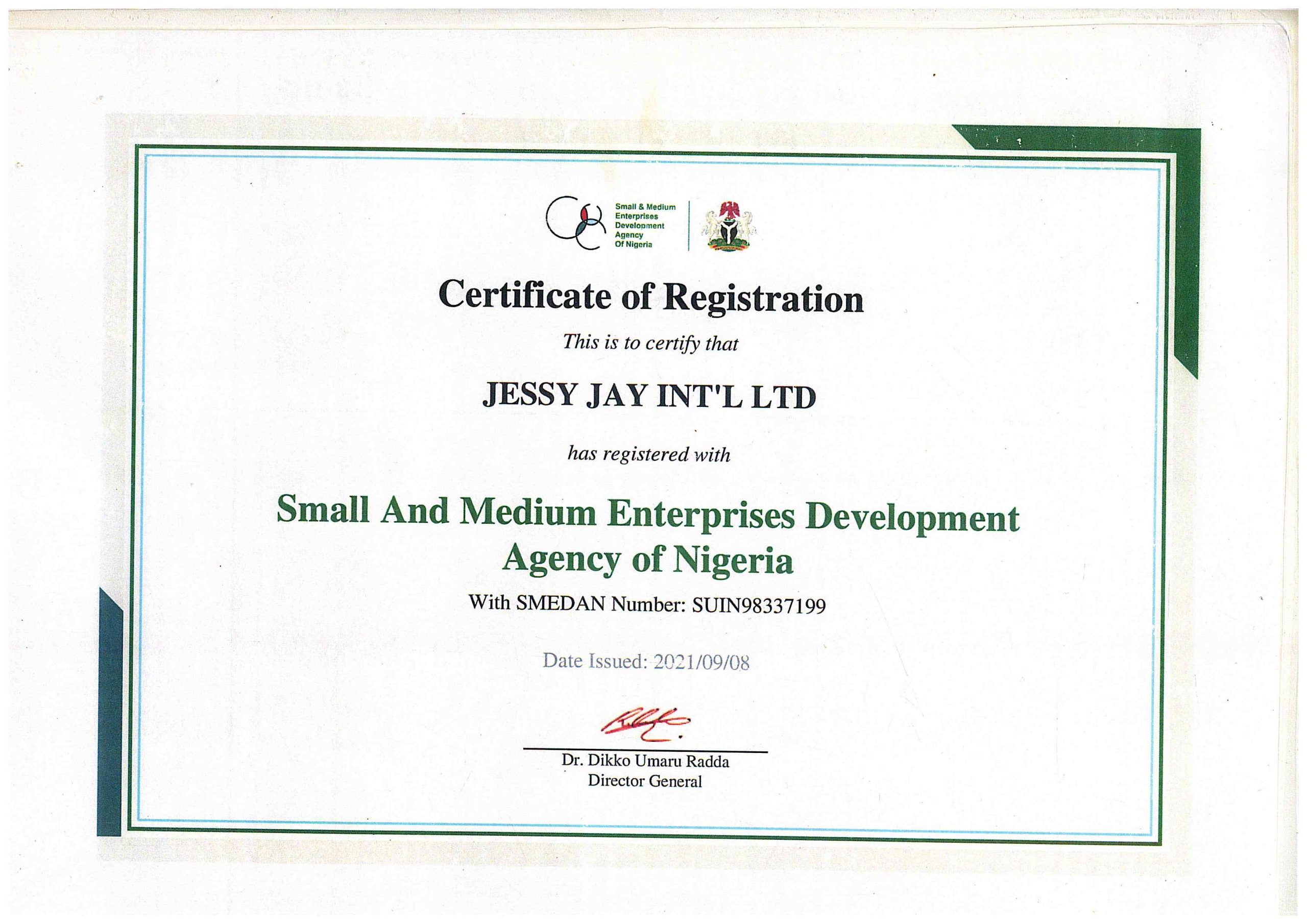
Jessy Jay International Limited uniquely solves the problem
of post-harvest losses and food insecurity for smallholder farmers and women
entrepreneurs by developing and providing affordable, eco-friendly, and locally
fabricated dehydration and storage technologies. Our innovative solar-powered
dehydration systems, black-body radiation dehydration, and multi-fuel dryers
are tailored specifically to the needs of small-scale farmers in Nigeria and
West Africa.
What sets us apart is our focus on affordability,
environmental sustainability, and community empowerment. We combine
cutting-edge renewable energy solutions with capacity-building programs,
ensuring that users can operate, maintain, and scale their processing
activities independently. Our technology reduces post-harvest losses, extends
shelf life, improves product quality, and opens access to local and
international markets—transforming agricultural practices into sustainable,
profitable, and resilient livelihoods.
By integrating local manufacturing, targeted training, and
market linkage support, we provide a comprehensive, scalable solution that
directly addresses the unique challenges faced by our users, fostering
inclusive growth and food security.
TAGLINE
·
Empowering
Agriculture, Enriching Lives
·
Innovative
Solutions for Sustainable Farming
·
Transforming
Agriculture, Empowering Communities
·
Green
Tech for a Better Tomorrow
·
Precision
Processing, Lasting Impact
·
Driving
Growth Through Agro Innovation
·
Where
Technology Meets Agriculture
·
Building
a Sustainable Future, One Farm at a Time
MARKETS JESSY JAY INTERNATIONAL
LIMITED OPERATES IN
Agricultural Sector
·
Smallholder
farmers and grassroots agricultural communities
·
Women
farmers and women-led cooperatives
·
Livestock
and fish farming sectors
·
Crop
and produce cultivation, harvest, and post-harvest handling
Food Processing & Post-Harvest
Technology
·
Agro-processing
enterprises focused on dehydration, drying, and storage solutions
·
Local
and regional food processing companies
·
Exporters
seeking high-quality, processed agricultural products
·
Micro,
small, and medium-sized enterprises (MSMEs) involved in food preservation
Rural and Community Development
·
Community-based
organizations and cooperatives
·
Women
and youth empowerment programs
·
Local
government and development agencies promoting sustainable agriculture
Environmental and Renewable Energy
·
Solar
energy and renewable energy markets for off-grid applications
·
Climate-smart
agriculture initiatives
·
Sustainable
infrastructure development
Market for Sustainable and Eco-Friendly
Technologies
·
Green
energy solutions for food processing
·
Eco-friendly
dehydration and preservation equipment
·
Climate-resilient
farming inputs and infrastructure
Regional West African Markets
·
Neighboring
countries such as Ghana, Côte d’Ivoire, Benin, Cameroon, Niger, and Togo
·
West
African export markets for dried and processed farm produce
International Markets
·
Diaspora
and international buyers interested in Nigerian and West African specialty
foods
·
Export
markets in Europe, North America, and Asia seeking ethically produced,
high-quality agro-products
Government and Development Agency
Markets
·
Collaborations
with agencies like the Nigerian Ministry of Agriculture, SMEDAN, PLASMIDA, ITF,
and international development organizations
·
Access
to grants, subsidies, and capacity-building programs for sustainable
agriculture and women empowerment
SERIES B FUNDING
OVERVIEW FOR JESSY JAY INTERNATIONAL LIMITED
Jessy Jay
International Limited is actively seeking Series B funding to accelerate its
growth trajectory and expand its impact across Nigeria and the West African
region. Building on our successful proof of concept, pilot projects, and
initial revenue streams, Series B capital will enable us to:
Scale Production and Manufacturing: Increase capacity for locally
fabricated dehydration and agro-processing equipment, ensuring quality,
efficiency, and affordability at larger volumes.
Expand Market Reach: Accelerate deployment of
technology and training programs to underserved regions, particularly targeting
women entrepreneurs, smallholder farmers, and cooperatives.
Enhance Product Innovation: Invest in research and
development to diversify our product portfolio, incorporate IoT and automation
technologies, and improve energy efficiency.
Strengthen Distribution and Supply
Chain: Establish
robust distribution channels and after-sales support systems to ensure
reliability and customer satisfaction.
Broaden Partnerships and Market
Penetration: Collaborate
with government agencies, NGOs, financial institutions, and international
development bodies to facilitate market entry and unlock new funding
opportunities.
Expand Regional Presence: Enter neighboring West African
markets such as Ghana, Côte d’Ivoire, Cameroon, and beyond, leveraging existing
pilot programs and community networks.
Funding Goals and Use of Capital:
·
Raise
an estimated $1–5 million USD in Series B funding.
·
Allocate
approximately 50% for manufacturing scale-up and technology development.
·
Invest
30% in marketing, capacity building, and market expansion initiatives.
·
Reserve
20% for operational infrastructure, team scaling, and strategic partnerships.
This Series
B funding round represents a critical milestone in our mission to revolutionize
food preservation and agro-processing in Nigeria and West Africa, fostering
sustainable development, empowering marginalized communities, and creating
scalable social impact.
SERIES C FUNDING
OVERVIEW FOR JESSY JAY INTERNATIONAL LIMITED
Jessy Jay
International Limited is seeking Series C funding to accelerate its growth
trajectory, scale operations, and expand its impact across Nigeria and the West
African region. Building on our proven technology, successful pilot programs,
and established market presence, Series C funding will enable us to:
·
Expand Manufacturing Capacity: Increase local fabrication of
dehydration and processing equipment to meet rising demand.
·
Market Penetration & Geographic
Expansion: Scale
distribution channels and establish processing hubs in new regions, including
neighboring West African countries.
·
Product Diversification &
Innovation: Develop
new dehydration solutions tailored to a broader range of agricultural
commodities and integrate advanced features such as IoT and automation.
·
Strengthen Sales & Marketing: Amplify brand awareness,
customer acquisition efforts, and strategic partnerships domestically and
regionally.
·
Enhance Training & Capacity
Building: Broaden
our training programs to empower more women entrepreneurs and smallholder
farmers.
·
Invest in Technology & R&D: Drive continuous innovation to
improve energy efficiency, durability, and user-friendliness of our products.
·
Impact & Sustainability Metrics: Bolster our efforts to measure
and maximize social, economic, and environmental impact, aligning with global
Sustainable Development Goals (SDGs).
Our goal
with Series C funding is to solidify Jessy Jay’s position as a leading provider
of affordable, eco-friendly agro-processing technology in Africa, fostering
inclusive economic growth, food security, and climate resilience.
We invite
strategic investors who share our vision of transforming agriculture through
innovation, sustainability, and social empowerment.
PRE-MONEY VALUATION OF
JESSY JAY INTERNATIONAL LIMITED
The pre-money valuation of Jessy Jay International Limited is
an assessment of the company’s value immediately prior to the closing of its
Series B funding round. This valuation reflects our current market position,
growth potential, intellectual property, operational assets, and strategic
initiatives.
Current Pre-Money Valuation Estimate:
$1 million
USD (Note: Placeholder; please we specify the actual valuation figure
based on our valuation process and investor negotiations)
Key Factors Influencing Our Valuation:
·
Proven
technology and scalable manufacturing processes for dehydration and
agro-processing equipment
·
Demonstrated
traction with pilot programs, initial sales, and strong demand in Nigeria and
neighboring West African markets
·
Robust
social impact, particularly in empowering women, smallholder farmers, and rural
communities
·
Strategic
partnerships with government agencies, NGOs, and development organizations
·
High-growth
potential in regional food processing and sustainable agriculture markets
·
Clear
roadmap for expansion, product diversification, and market penetration
Implications:
·
The
pre-money valuation sets the basis for determining the equity stake to be
offered to Series B investors
·
It
influences the post-money valuation and valuation multiples used in
negotiations
Pre-Money Valuation of Jessy Jay
International Limited
Based on our
current market traction, growth prospects, and regional impact, the estimated
pre-money valuation of Jessy Jay International Limited is approximately $1.5
million to $3.0 million USD. This valuation reflects our proven business model,
social impact initiatives, and scalability potential as we prepare for our
Series B funding round.
1.
A common share represents a piece of ownership in a company, giving
shareholders voting rights on corporate matters (like electing the board) and a
claim on profits (dividends), though they are paid after preferred shareholders and creditors during liquidation, making
them a residual claim with potential for growth through capital appreciation.
Key Characteristics
·
Ownership: Buying a common share means you own a small part of the
company.
·
Voting Rights: You get a say in company
decisions, proportional to the number of shares you own.
·
Dividends: May receive a share of company profits, but payments
aren’t guaranteed.
·
Liquidation Priority: Have the lowest claim on
assets if the company goes bankrupt, paid only after all debts and preferred
shareholders are settled.
·
Capital Gains: Profit can be made by
selling shares for more than you paid (capital appreciation).
Common vs. Preferred Shares
·
Common: Vote, residual claim, lower
priority in liquidation, variable dividends.
·
Preferred: Typically no voting rights,
higher priority in liquidation, fixed dividends.
In essence, common shares offer
participation in a company’s growth and control but come with higher risk and
lower security than preferred shares or bonds.
2.
Preferred shares (or preference shares) are a type of company stock offering
priority dividends and asset claims over common stock but typically without
voting rights, functioning as a hybrid between equity (ownership) and debt
(fixed income) by providing stable, regular income and higher safety in
liquidation, making them attractive for income-focused investors. They
have a senior claim to earnings and assets compared to common shareholders,
though they rank below bondholders. Key types include cumulative, non-cumulative, convertible, and participating, each with unique terms.
Key
Characteristics
·
Priority Dividends: Receive fixed or floating
dividends before common shareholders.
·
Liquidation Preference: Paid out before common shareholders
but after creditors/bondholders if the company liquidates.
·
No/Limited Voting Rights: Generally lack voting
rights, preserving control for common shareholders.
·
Hybrid Nature: Combines features of
stocks (ownership) and bonds (fixed income).
Types
of Preferred Shares
·
Cumulative: Missed dividends must be paid in full before common
shareholders get anything.
·
Non-Cumulative: Missed dividends are lost.
·
Participating: May earn additional
dividends beyond the fixed rate.
·
Convertible: Can be exchanged for a set number of common shares.
Why
Companies Issue Them
Raise
capital without diluting voting control and Attract investors seeking stable
income.
Why
Investors Buy Them
·
Steady income stream from fixed dividends.
·
Lower risk/higher priority than common stock.
Considerations
for Investors
·
Lower growth potential than common stock.
·
Dividends aren’t guaranteed like bond interest.
·
Can be less liquid than common shares.
3. “KISS Equity” refers to the Keep It Simple Security (KISS), a type of investment agreement for
early-stage startups, developed by 500 Startups, that defers valuing the
company and provides investors with the right to receive future equity (stock)
in a later financing round, similar to SAFEs but
often includes interest and a maturity date, making it a simplified alternative
to traditional convertible notes.
How KISS Works:
1.
Investment: An investor gives capital to a startup.
2.
Future Equity: In return, the investor
gets a contractual right to future equity, not actual shares yet.
3.
Conversion Event: This right converts into
preferred stock when a qualifying future event occurs, usually a larger funding
round (a “priced round”) or a sale of the company.
4.
Valuation: The conversion price is typically based on a pre-agreed
valuation cap or a discount on the new round’s price, avoiding a difficult
valuation discussion at the initial investment stage.
Key Features:
·
Simplicity: Designed to be easy for founders and investors to
understand and use.
·
Investor Protection: Often includes features
like interest accrual (e.g., 5%) and a maturity date (e.g., 18 months), making
it more investor-friendly than some SAFEs.
·
Alternative to Convertible Notes: Aims to streamline
early funding by deferring complex valuation discussions, much like
SAFEs.
In essence, a KISS
provides a straightforward pathway for startups to raise initial capital,
deferring the thorny issue of company valuation until a more significant
investment round, at which point the KISS converts into equity.
4. The term
“pre-money SAFE” refers to a specific type of Simple
Agreement for Future Equity, an investment contract used by early-stage
startups to raise capital quickly. In a pre-money SAFE, the investor’s future
ownership percentage is calculated based on the company’s valuation before any
new SAFE investments are added to the capitalization table.
Key Characteristics
·
Valuation Timing: The “pre-money” means the
valuation cap in the agreement refers to the company’s value prior to the new
capital from the SAFE round being included.
·
Dilution Impact: All SAFE investors in a pre-money
round dilute each other’s ownership, in addition to diluting the founders and
existing shareholders. The final ownership percentages remain uncertain until a
future “priced round” of financing (like a Series A) occurs, which
triggers the conversion of the SAFEs into actual shares.
·
Founder-Friendly (Initially): Pre-money SAFEs are often
considered more founder-friendly because the initial calculation results in a
higher share price for investors (meaning they receive fewer shares for their
money compared to a post-money SAFE), potentially leading to less overall
dilution for the founders at the time of conversion.
·
Uncertainty for Investors: Because the final ownership is a
floating percentage dependent on the total amount raised through other SAFEs,
investors have less certainty about their exact stake until the conversion
event.
Pre-Money vs. Post-Money SAFE
Y
Combinator, the creator of the SAFE, introduced the original pre-money version
in 2013 but shifted to the post-money SAFE as the industry standard in 2018 to
provide more clarity and certainty for investors regarding their ownership
stakes.
A $200,000 investment doesn’t determine the pre-money
valuation; instead, we need the investor’s desired ownership percentage or the
agreed-upon post-money valuation to calculate it, using the
formula:
·
Pre-Money
Valuation = Post-Money Valuation – Investment Amount.
·
For
example, if investors get 20% ownership for $200k (meaning a $1M post-money
valuation), the pre-money value is $800,000 ($1M – $200k).
How to Calculate Pre-Money Valuation:
Determine the Post-Money Valuation
(PMV): This is
the total value of the company after the investment.
Use the Formula: Subtract the investment amount
from the post-money valuation to find the pre-money value.
Example Scenarios:
Scenario 1: Investor Gets 20% for $200,000
·
Post-Money
Valuation: $200,000 (Investment) / 0.20 (20%) = $1,000,000.
·
Pre-Money
Valuation: $1,000,000 (Post-Money) – $200,000 (Investment)
= $800,000.
Scenar
io 2: Investor Gets 25% for $200,000
·
Post-Money
Valuation: $200,000 / 0.25 = $800,000.
·
Pre-Money
Valuation: $800,000 (Post-Money) – $200,000 (Investment)
= $600,000.
Key
Takeaway: The $200,000 is the cash injection; the pre-money valuation is
the starting point before that cash arrives, and it depends on how
much equity the investors demand for their $200,000.