Welcome to BSME2E
Live
Our current customers
and target customer segments include:
1. Rural Farmers and
Agricultural Cooperatives: Smallholder farmers seeking climate-resilient
farming solutions, access to innovative technologies, and sustainable practices
to improve productivity and livelihoods.
2. Local Government
Agencies and Community Leaders: Entities focused on climate adaptation,
rural development, and promoting sustainable practices within their regions.
3. Impact Investors
and Social Enterprises: Organizations interested in funding and supporting
sustainable, scalable solutions that address climate challenges and generate
social impact.
4. NGOs and
Development Agencies: Partners working on climate resilience, rural
empowerment, and capacity-building initiatives in underserved communities.
5. Agricultural Input
Suppliers and Distributors: Companies looking to expand their offerings
with sustainable and climate-smart products to rural markets.
Our target customer segments are
primarily rural communities and organizations operating within regions
vulnerable to climate change impacts, with a focus on those seeking innovative,
scalable solutions to improve resilience, productivity, and economic stability.
We aim to serve customers who value sustainability, community development, and
long-term impact.
Our company addresses the critical
problem of food insecurity and climate vulnerability faced by smallholder
farmers in rural communities. These farmers often rely on traditional farming
methods that are increasingly rendered ineffective by climate change, including
unpredictable weather patterns, prolonged droughts, and floods. As a result,
crop yields decline, food waste increases, and farmers struggle to generate
stable income, perpetuating cycles of poverty and malnutrition.
One of the major challenges is the
lack of affordable, sustainable preservation and processing methods that can
extend the shelf life of harvested crops, reduce post-harvest losses, and
improve income stability. Many rural farmers lack access to reliable energy
sources or modern infrastructure to implement effective food preservation
techniques. This often forces them to sell perishable produce immediately after
harvest at low prices, or worse, lose significant portions of their harvest due
to spoilage.
Our company provides an innovative
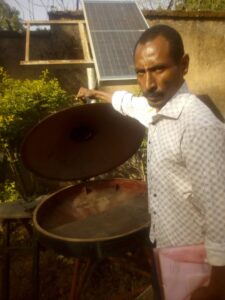
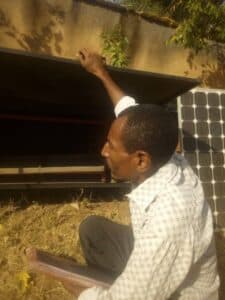
solution through the deployment of solar-powered dehydrators tailored for
small-scale farmers. These dehydrators harness renewable solar energy to dry
fruits, vegetables, herbs, and other perishable crops efficiently and
cost-effectively. By doing so, we enable farmers to preserve their produce for
longer periods, access new markets, and fetch better prices. The solar
dehydrators are designed to be affordable, easy to use, and adaptable to
various crops, making them accessible even to farmers with limited technical
knowledge or financial resources.
The core of our approach lies in
promoting sustainable, climate-smart agriculture. Solar dehydration reduces
dependence on fossil fuels or charcoal-based drying methods, thereby decreasing
greenhouse gas emissions and indoor air pollution. It also minimizes
post-harvest waste, which is a significant contributor to food loss
globally—especially in developing countries. By improving crop preservation,
our solution enhances food security, supports local economies, and contributes
to climate resilience.
Moreover, our company offers
capacity-building support and training to farmers on best practices for crop
drying and storage, ensuring they maximize the benefits of the technology. We
also facilitate access to markets through partnerships with buyers who value
sustainably produced, high-quality dried products. This creates a value chain
that benefits farmers economically and environmentally.
In summary, our company solves the
problem of post-harvest food loss, income instability, and climate
vulnerability among smallholder farmers by providing accessible, renewable
energy-based dehydration technology. Our solution promotes sustainable
agriculture, reduces environmental impact, and empowers rural communities to
build resilient livelihoods in the face of climate change. Through innovation,
education, and community engagement, we aim to create a scalable model that
transforms rural food systems and fosters long-term sustainability.