Signature Offerings Overview
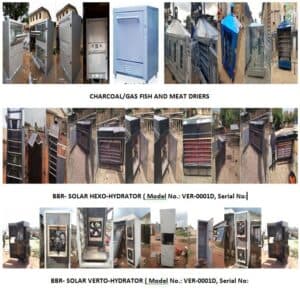
Fish is a major source of protein for many Nigerians, but post-harvest losses from inadequate preservation methods remain a significant challenge. This multi-fuel fish dryer — built to run on electric, gas, and charcoal heater systems — provides a reliable solution for preserving fish, strengthening food security, and improving the livelihoods of fish farmers and traders.
Problem It Solves
Current fish drying methods in Nigeria are largely inefficient and heavily dependent on weather conditions, leading to significant post-harvest losses. These methods also carry contamination risks. A dryer capable of running on electric, gas, or charcoal ensures consistent drying regardless of energy availability or weather — directly addressing both the spoilage and health-safety problems of traditional methods.
Benefits & Real Examples
- Reduces post-harvest losses and strengthens food security
- Increases income for fish farmers and traders
- Multi-fuel flexibility (electric, gas, charcoal) keeps drying consistent regardless of power outages or weather
- Reduces contamination risk compared to open-air traditional drying
- Designed for the Nigerian context — accounts for locally common fish types and typical drying conditions
- Locally sourced materials — lowers cost, supports local businesses, and simplifies maintenance and part replacement
- Multilingual accessibility — training and user manuals available in English, Yoruba, Hausa, and Igbo
UN SDGs Alignment
- SDG 1 – No Poverty: Increases income for fish farmers and traders
- SDG 2 – Zero Hunger: Reduces post-harvest losses, strengthening food security
- SDG 3 – Good Health & Well-being: Lowers contamination risk versus traditional open-air drying
- SDG 8 – Decent Work & Economic Growth: Supports local businesses through local material sourcing
- SDG 9 – Industry, Innovation & Infrastructure: Modern multi-fuel design adapted to local infrastructure realities
- SDG 10 – Reduced Inequalities: Multilingual training broadens access across communities
How It Works
- Fish is loaded into the drying chamber (capacity: 500 — unit to be confirmed)
- The system can be powered by electric, gas, or charcoal heat sources, selected based on what’s available
- This multi-fuel flexibility keeps drying consistent even during power outages or poor weather
- Built using locally sourced materials for easier long-term maintenance and part replacement
Service Comparison
|
Traditional Open-Air Fish Drying |
Multi-Fuel Fish Dryer |
| Weather dependency |
High — halts in rain/humidity |
Low — electric/gas/charcoal options |
| Contamination risk |
Higher (exposed to elements, pests) |
Lower — enclosed drying system |
| Power source |
Sun only |
Electric, gas, or charcoal (flexible) |
| Maintenance |
N/A |
Built with locally sourced materials for easy repair |
Pricing Summary
This is a custom-fabricated unit — total cost is not fixed and may change within one month of proposal submission due to Naira inflation affecting material costs.
Terms of Service
- An initial down payment of 70% of total cost is required for design and fabrication (galvanized steel finishing)
- The remaining 30% balance is due after 70% of the work has been completed
- Construction through completion and delivery takes approximately 3 months, due to irregular regional power supply
- The total cost estimate may change within one month of proposal submission due to Naira inflation affecting material procurement costs